Singer Reveals Its Reimagined Porsche 911 Cabriolet Based on the 964 Generation

Singer Reveals Its Reimagined Porsche 911 Cabriolet Based on the 964 Generation Singer has once again elevated the classic Porsche 911 to extraordinary heights, this time focusing on the 964-generation Cabriolet. Known worldwide for redefining air-cooled 911s with obsessive craftsmanship and engineering precision, the California-based company introduces a limited-production open-top model that merges vintage emotion with modern performance. Limited to just 75 examples, this re-imagined Cabriolet represents exclusivity, technical mastery, and timeless design. Reinforced Structure and Modern Engineering The original Porsche 964 Cabriolet, produced between 1989 and 1994, delivered the unmistakable flat-six soundtrack in open-air form. However, like many convertibles derived from coupe platforms, chassis rigidity was never its strongest trait. Singer addresses this through a comprehensive structural overhaul. Each donor vehicle is stripped to its core and rebuilt with additional steel reinforcements and advanced composite materials. The result is significantly improved torsional stiffness, delivering sharper handling and a more planted driving experience while preserving the character of the classic 911. The body panels are crafted entirely from carbon fiber, reducing weight and enhancing precision. The exterior design draws inspiration from the wide-body Turbo models of the 1980s, refined with modern proportions and flawless detailing. A newly engineered two-piece power-operated folding roof system replaces the original mechanism. This new design creates a cleaner silhouette when lowered and integrates seamlessly into the bodywork, improving both aesthetics and structural harmony. A 4.0-Liter Flat-Six Engine with Advanced Technology Power comes from a naturally aspirated 4.0-liter flat-six producing 420 horsepower. This engine combines air-cooled cylinders with water-cooled cylinder heads, a sophisticated solution inspired by the legendary Porsche 959. The configuration improves thermal efficiency while preserving the distinctive air-cooled character enthusiasts value. For the first time in a Singer-restored engine, variable valve timing is introduced, expanding torque delivery across the rev range and enhancing throttle response. The engine revs confidently to 8,000 rpm and is paired exclusively with a six-speed manual transmission, maintaining a pure and engaging driving experience. Engineering consultation from Cosworth contributes to the precision and durability of the powertrain, ensuring performance that matches the car’s exceptional build quality. Performance and Driving Dynamics Beyond the engine, the chassis and braking systems receive significant upgrades. Carbon-ceramic brakes are available, providing strong and consistent stopping power. The car rides on 18-inch center-lock wheels fitted with Michelin Pilot Sport tires, delivering grip and balance suited for both spirited driving and refined touring. Additional modern features include adjustable traction control with five levels, a nose-lift system for practicality, and integrated Apple CarPlay with navigation. These elements enhance usability without compromising the analog essence of the driving experience. Distinct Personalities, Unified Craftsmanship The launch specifications demonstrate Singer’s flexibility in personalization. One configuration, finished in Guards Red, emphasizes a sport-focused aesthetic with bold aerodynamic detailing and a pronounced rear spoiler. Another example, finished in blue, reflects a more restrained touring philosophy with a discreet speed-activated rear spoiler and subtle visual presence. Regardless of specification, each car showcases meticulous interior craftsmanship, bespoke materials, and an attention to detail that defines Singer’s reputation. Limited Production and Exclusive Ownership Only 75 units will be produced, each built to individual client specifications. Singer does not disclose pricing, though previous commissions suggest a level consistent with ultra-exclusive automotive craftsmanship. This reimagined 964 Cabriolet embodies the fusion of classic Porsche DNA and contemporary engineering. It delivers open-air driving combined with structural integrity, high-revving performance, and handcrafted precision. Singer continues to demonstrate that honoring heritage does not require compromise. Instead, it demands refinement, innovation, and an unwavering commitment to excellence. You may love to see.. Will Manual Transmissions Make a Comeback in Modern Cars? Will Manual Transmissions Make a Comeback in Modern Cars? Manual transmissions have become increasingly rare on today’s roads, with the… Read More → Turbo vs SuperCharger : Which One Truly Delivers More Power? Turbocharger vs Supercharger: Which One Truly Delivers More Power? TurboCharger Runs on exhaust gases. The hot air leaving the engine… Read More → Toyota Tacoma Records Best Sales Year Ever in 2025, Dominating the Mid-Size Pickup Truck Market in the U.S. Toyota Tacoma Achieves Record-Breaking Sales in 2025 Toyota Tacoma has officially recorded the best sales year in its history during… Read More →
Toyota Tacoma Records Best Sales Year Ever in 2025, Dominating the Mid-Size Pickup Truck Market in the U.S.

Toyota Tacoma Achieves Record-Breaking Sales in 2025 Toyota Tacoma has officially recorded the best sales year in its history during 2025, reinforcing its position as the most popular mid-size pickup truck in the United States. In a highly competitive automotive market, Tacoma’s performance stands out as a clear success story, driven by strong demand, product updates, and Toyota’s growing focus on hybrid technology. According to official sales figures, Toyota sold 274,638 units of the Tacoma in the U.S. throughout 2025. This represents a 42.4% increase compared to the previous year, surpassing the brand’s earlier sales record set in 2021. The results confirm that mid-size pickup trucks remain highly attractive to American consumers, even as electrification and fuel efficiency become increasingly important purchasing factors. Why Demand for Toyota Tacoma Continues to Rise The strong sales growth of the Toyota Tacoma reflects broader trends in the U.S. automotive market. Many buyers are moving away from full-size pickup trucks due to higher prices and fuel costs, while still seeking vehicles that offer durability, utility, and off-road capability. Key factors behind Tacoma’s continued success include: Toyota’s long-standing reputation for reliability and durability Major improvements in the latest Tacoma generation Increased interest in fuel-efficient and hybrid pickup trucks Versatility for both work and lifestyle use Toyota has positioned Tacoma as a balanced solution that meets professional needs while also appealing to outdoor and adventure-focused customers. Clear Dominance Over Mid-Size Pickup Competitors Toyota Tacoma’s leadership becomes even more evident when compared to its closest competitors in the mid-size pickup segment. In 2025, Tacoma outsold rival models by a wide margin: Chevrolet Colorado: approximately 107,000 units sold Nissan Frontier: just over 65,000 units GMC Canyon: around 37,000 units These numbers highlight Tacoma’s overwhelming dominance and its role as the benchmark vehicle in the mid-size pickup category. While competitors have improved their offerings, none have come close to matching Tacoma’s market performance. Strong Overall Growth for Toyota in the U.S. Market Beyond Tacoma, Toyota’s overall performance in the U.S. market was also strong in 2025. The brand reported an 8% increase in total vehicle sales, reflecting solid consumer confidence and effective product strategy. Several Toyota models experienced notable growth, including: Toyota Crown Signia Toyota Prius At the same time, a few models saw limited declines, which is typical in a diverse product portfolio. Overall, Toyota’s balanced lineup helped stabilize its market position amid economic uncertainty and changing consumer preferences. Hybrid and Plug-in Hybrid Vehicles Drive Future Growth One of the most significant highlights of Toyota’s 2025 performance is the growing role of electrified vehicles. Hybrid and plug-in hybrid models accounted for approximately 47% of Toyota’s total U.S. sales, demonstrating the success of the company’s long-term electrification strategy. Toyota’s approach focuses on practical hybrid solutions rather than full electrification alone. The availability of hybrid powertrains in vehicles like the Tacoma allows customers to benefit from improved fuel efficiency while maintaining the power and capability expected from a pickup truck. This strategy has proven especially effective in the U.S., where many consumers seek environmentally conscious options without sacrificing performance or utility. What This Means for the Future of Toyota Tacoma The record-breaking success of Toyota Tacoma in 2025 confirms that it is not just a short-term bestseller, but a long-term leader in its segment. By combining proven reliability, modern design, advanced technology, and hybrid options, Tacoma continues to meet the evolving needs of American drivers. With demand for mid-size pickups remaining strong and hybrid adoption accelerating, Toyota Tacoma is well-positioned to maintain its dominance in the coming years. Industry analysts expect the model to remain a key pillar of Toyota’s U.S. sales strategy moving forward. Sources 1. Toyota Tacoma sales figures and comparison with competitors Yahoo Autos: The Toyota Tacoma Just Had Its Best Year Ever — https://autos.yahoo.com/new-vehicles-and-reviews/articles/toyota-tacoma-just-had-best-223000877.html 2. Toyota Motor North America official 2025 year-end sales report PR Newswire: Toyota Motor North America Reports 2025 U.S. Sales Results — https://www.prnewswire.com/news-releases/toyota-motor-north-america-reports-2025-us-sales-results-302652746.html 3. Additional Toyota sales context (electrified vehicles share) Lexus USA Newsroom: Toyota Motor North America Reports 2025 U.S. Sales Results — https://pressroom.lexus.com/toyota-motor-north-america-reports-2025-u-s-sales-results/ You may love to see.. Ford Mustang Dark Horse Review (2025): Specs, Performance, Price & Full Global Analysis Ford Mustang Dark Horse Review – The Global Muscle Icon of 2025 The Ford Mustang Dark Horse represents the most… Read More → Electric vs Hybrid Cars: Which Is the Smarter Choice in 2026? Electric vs Hybrid Cars: Which Is the Smarter Choice in 2026? Electric and hybrid vehicles are no longer niche options… Read More → Singer Reveals Its Reimagined Porsche 911 Cabriolet Based on the 964 Generation Singer Reveals Its Reimagined Porsche 911 Cabriolet Based on the 964 Generation Singer has once again elevated the classic Porsche… Read More →
800 Volts and 500 Miles: How the 2026 BMW i3 “Neue Klasse” Reinvents the Ultimate Driving Machine
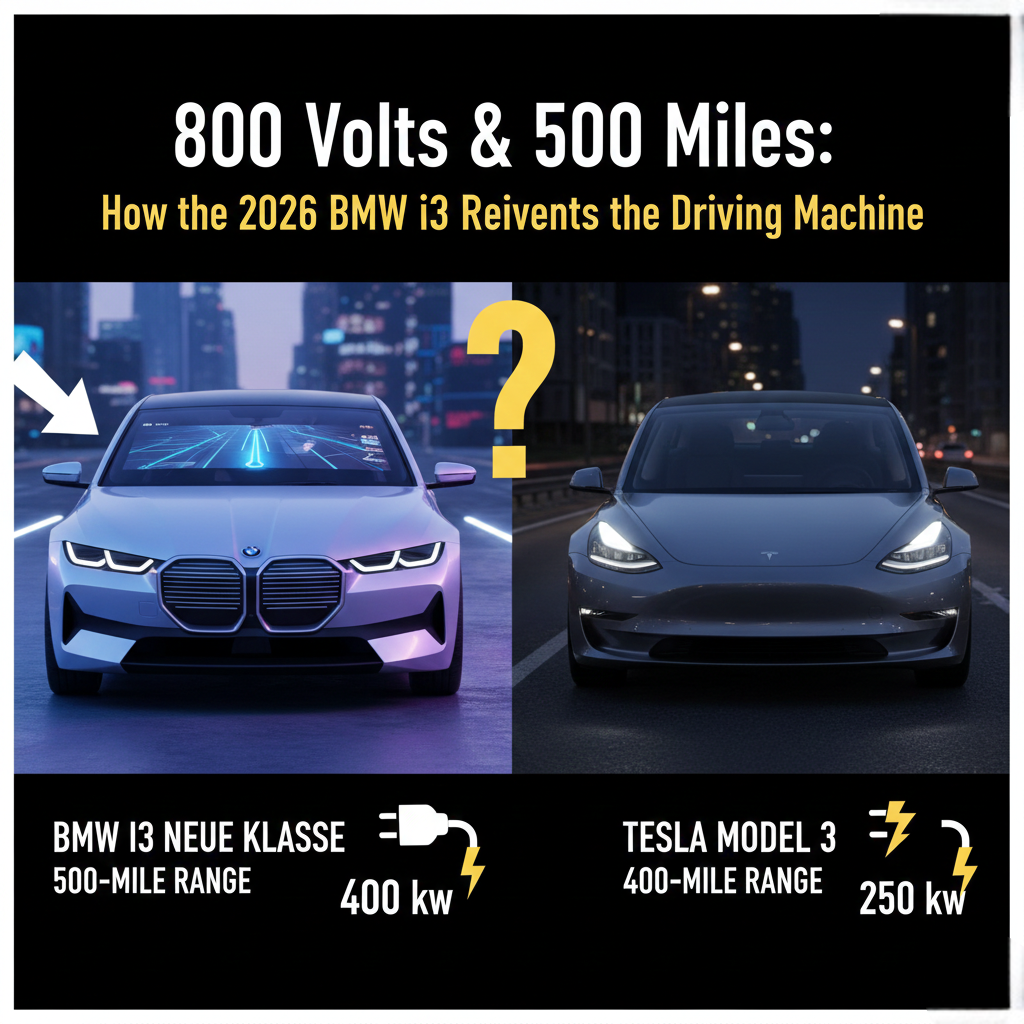
Why supercars still use RWD instead of AWD ? The 3 Series has been the “Gold Standard” for sports sedans for over 50 years. But in 2026, BMW is doing something radical: they are rebooting the entire brand with the Neue Klasse (New Class). The flagship of this revolution is the 2026 BMW i3 sedan. Forget everything you know about the old, quirky carbon-fiber hatchback of the 2010s; this is a pure, high-performance electric sedan designed to take back the crown from the Tesla Model 3. The Reset: Why “Neue Klasse” is a Big Deal In automotive history, the original Neue Klasse of the 1960s saved BMW from bankruptcy and defined the “Ultimate Driving Machine” persona. The 2026 reboot aims to do the same for the electric era. This isn’t just a 3 Series with the engine swapped for a battery. It’s built on a bespoke 800-volt architecture that prioritizes three things: Efficiency, Speed, and Soul. 2026 BMW i3 Key Specs: Architecture: 800V “Neue Klasse” Platform Range: Up to 500 miles (WLTP) / ~400 miles (EPA estimated) Charging: 10% to 80% in ~20 minutes (400kW peak) Power: 460 hp (AWD dual-motor) to 600+ hp (M-variant) Release Date: Late 2026 (Production starts mid-2026 in Munich) 1. The Tech: “Panoramic Vision” Overload The most controversial feature of the 2026 i3 is the complete removal of the traditional instrument cluster. In its place is BMW Panoramic Vision. This is a full-width Head-Up Display (HUD) that projects driving data, navigation, and entertainment across the entire base of the windshield. The Benefit: It keeps your eyes on the road while allowing passengers to see information as well. The Risk: Is it a distraction, or the future? Unlike Tesla’s single central screen, BMW is betting that “eyes on the horizon” is the safer, more premium way to drive. 2. Gen6 Batteries: Smaller, Lighter, Stronger BMW has finally moved away from “pouch” cells to cylindrical battery cells. These Gen6 batteries are 20% more energy-dense and allow for a much lower floor, giving the i3 the low, aggressive stance a 3 Series is famous for. More importantly, the 800-volt system means you can add 200 miles of range in just 10 minutes at a high-power charger. This effectively kills “range anxiety” for anyone moving from a gas-powered 330i to the electric i3. 3. Can it Out-Drive a Tesla Model 3? Tesla has long held the lead in software and efficiency, but BMW is coming for the driving dynamics. The Chassis: The i3 features “Heart of Joy,” a new super-brain that integrates the powertrain and chassis control into one unit. This allows for millisecond-fast torque vectoring. The “M” Factor: BMW has already confirmed a quad-motor M version is in testing, rumored to deliver over 1,000 hp. Even the base models are being tuned at the Nürburgring to ensure they feel like a BMW, not an appliance. The Design: Radical Minimalism The 2026 i3 dumps the “giant nostril” grille of recent years. Instead, it features a wide, horizontal “phygital” (physical + digital) grille that merges the headlights and kidneys into one light-up element. It’s clean, retro-futuristic, and looks like nothing else on the road. Verdict: The King is Back (In Electric Form) The 2026 BMW i3 isn’t just another EV; it’s a statement that the traditional sedan isn’t dead. While the world buys SUVs, BMW is doubling down on the car that made them famous. If they can deliver the promised 500-mile range and that signature “Sheer Driving Pleasure,” the Tesla Model 3 may finally have met its match. Sources & Further Reading BMW Group: The Start of a New Era – Neue Klasse BMW Blog: i3 Neue Klasse Challenges Tesla Model 3 CarSales: 2026 BMW i3 Makes Public Debut Electrive: Munich Plant Ready for Neue Klasse Production Top Gear: BMW iX3 and Neue Klasse First Drive Concepts
The $45k Rivian R2: This is the make-or-break moment for Rivian. Review its ability to compete with the Tesla Model Y in the mass market.
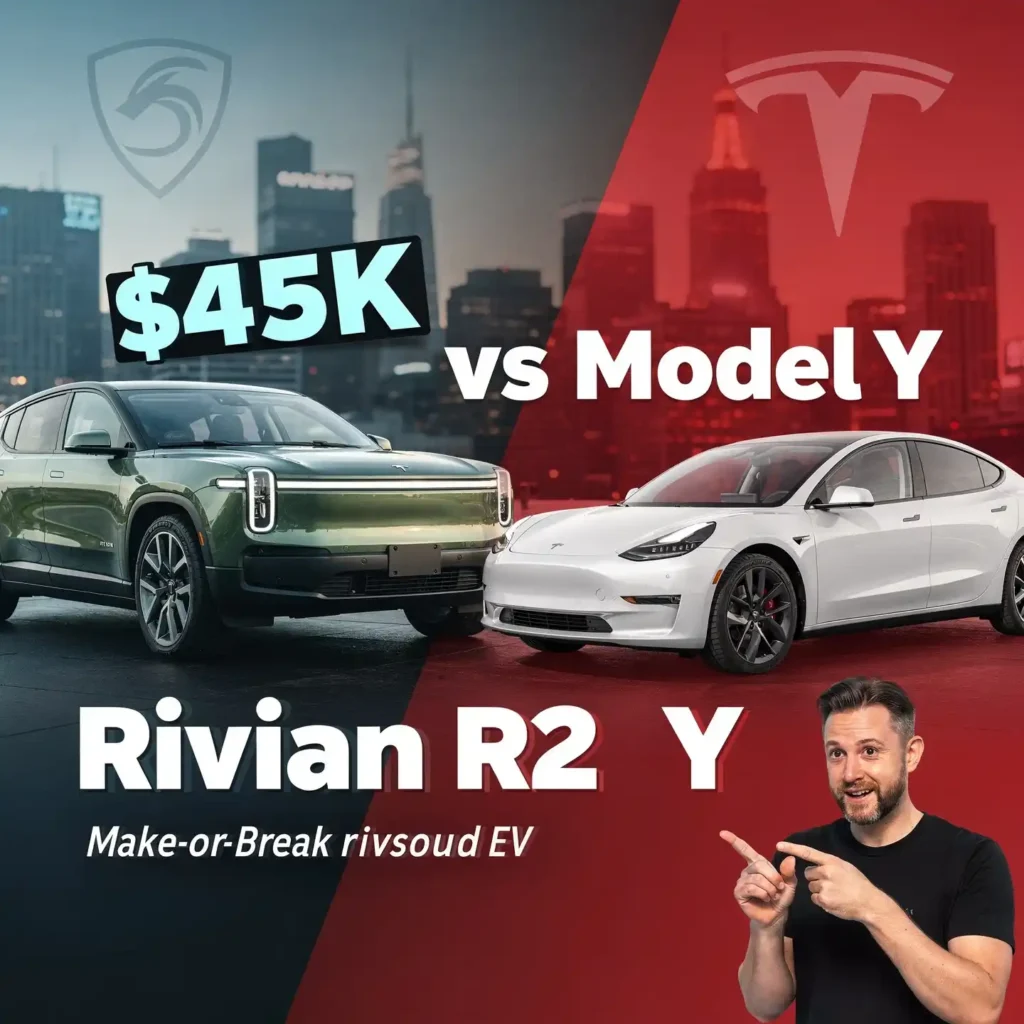
The $45k Rivian R2: This is the make-or-break moment for Rivian. When Rivian first showed off the R2 back in 2024, it felt like a distant promise. Fast forward to early 2026, and the “Model 3 moment” for Rivian is finally here. As validation units roll off the line in Normal, Illinois, the $45,000 price point is no longer a teaser—it’s a shot across the bow of every major EV manufacturer. Is the 2026 Rivian R2 the “Tesla Killer” we’ve been waiting for, or just a smaller, cheaper R1S? Here is everything you need to know about the most important EV of the year. The $45,000 Question: Can Rivian Keep Its Promise? In an era of rising material costs, Rivian CEO RJ Scaringe has doubled down on the $45,000 starting price. This puts the R2 squarely in competition with the Tesla Model Y, Hyundai Ioniq 5, and the Ford Mustang Mach-E. While the “Launch Edition” arriving in the first half of 2026 will likely be a dual-motor configuration priced closer to $55,000, the entry-level RWD model remains the North Star for the brand’s mass-market ambitions. 2026 Rivian R2 Quick Specs: Starting Price: ~$45,000 Range: 300+ miles (across all motor configurations) Performance: 0–60 mph in under 3.0 seconds (Tri-Motor variant) Charging: 10% to 80% in < 30 minutes (NACS native) Seating: 5 passengers What Makes the R2 Different? (It’s Not Just a Mini R1S) While it keeps the iconic “stadium” headlights and boxy silhouette of its big brother, the R2 is built on an entirely new midsize platform designed for scale. 1. The Adventure-First Interior Rivian knows its audience. Unlike the minimalist (and sometimes sterile) Tesla cabins, the R2 is packed with “Easter eggs” and utility: Fold-Flat Everything: Every single seat in the R2—including the driver and passenger seats—folds completely flat. It transforms the cabin into a perfect indoor camping pod. Roll-Down Rear Glass: Borrowing a page from the Toyota 4Runner playbook, the R2’s rear window drops fully into the tailgate, allowing for easy gear access or a true open-air feel. Double Gloveboxes: A small but significant detail—Rivian added a second glovebox to fix the storage complaints of the R1 series. 2. Next-Gen 4695 Battery Cells The R2 is the first to debut Rivian’s 4695 cylindrical cells. These are larger and more energy-dense than the 2170 cells found in previous models. This tech allows the R2 to maintain a 300-mile range even with a smaller, lighter battery pack, significantly improving efficiency and handling. 3. Bidirectional Charging (V2H) Perhaps the most underrated feature is the Vehicle-to-Home (V2H) capability. Every R2 comes equipped with the hardware to power your house during a blackout. In 2026, as grid stability becomes a bigger talking point, having a 100kWh “backup generator” in your driveway for $45k is a massive selling point. Rivian R2 vs. Tesla Model Y: The 2026 Showdown For years, the Model Y has been the default choice. Here is how the R2 stacks up: Feature 2026 Rivian R2 2026 Tesla Model Y (Juniper) Character Rugged SUV / Off-road capable Sleek Crossover / On-road focus Ground Clearance 9.8 inches ~6.2 inches Cargo Innovation Retractable rear glass + Frunk Traditional Hatch + Frunk User Interface 15.6″ screen (No CarPlay/Android Auto) 15.4″ screen (Proprietary software) The “Vibe” Patagonia & Hiking Boots Silicon Valley & Minimalism While Tesla still holds the edge in software maturity and supercharging integration (though Rivian now uses NACS natively), the R2 offers a “personality” that the aging Model Y design lacks. Verdict: The SUV We Actually Need The Rivian R2 isn’t trying to be a luxury lounge; it’s trying to be a tool. It’s for the family that goes camping on weekends but needs a sensible commuter during the week. By hitting that $45,000 mark, Rivian has moved from a “boutique” brand to a serious contender for the driveway of every average American. If you’ve been waiting for an EV that doesn’t look like a “blob” and can actually handle a dirt trail without scraping its battery, the R2 is the one. Sources & Further Research Rivian Official: Meet R2 and R3 Car and Driver: 2026 Rivian R2 What We Know So Far InsideEVs: Rivian R2 Launch Edition Options CarGurus: 2026 Rivian R2 Pricing and Specs Nasdaq: Rivian R2 Production and Market Impact Are you ready to trade in your gas SUV for a Rivian, or are you holding out for the even smaller R3? Let us know in the comments below! Would you like me to generate a high-res thumbnail image for this Rivian R2 blog post?
The Return of the Prelude: Honda has finally brought the Prelude back as a hybrid.

The Return of the Prelude: Honda has finally brought the Prelude back as a hybrid. In the world of automotive revivals, few names carry as much weight—or as much baggage—as the Honda Prelude. After a 25-year hiatus, the 2026 Honda Prelude has officially returned to showrooms, and it has sparked a fierce debate across the internet. Is this the high-tech, high-revving successor to the 90s legend we’ve been waiting for, or is it simply a “sporty” Accord in a fancy suit? Let’s dive into the specs, the soul, and the reality of Honda’s newest hybrid coupe. The Legacy: Why the Prelude Matters To understand the 2026 model, you have to remember why the original was so special. From 1978 to 2001, the Prelude was Honda’s “technology playground.” It introduced us to the first mass-produced four-wheel steering (4WS) system, sleek “wedge” styling, and the screaming VTEC engines that defined 90s car culture. The Prelude wasn’t just a car; it was a statement. It sat comfortably between the humble Civic and the luxury-focused Legend, offering a sophisticated alternative to the more “raw” Integra. The 2026 Reality: A New Kind of Performance The first thing you’ll notice about the 2026 Honda Prelude is that it doesn’t have a manual transmission. For the purists, this was a hard pill to swallow. Instead, Honda has equipped the car with its latest two-motor hybrid system, similar to what you’ll find in the 2026 Civic and Accord Hybrids. 2026 Honda Prelude Key Specs: Powertrain: 2.0-liter 4-cylinder Atkinson-cycle engine + dual electric motors Total Output: 200 hp / 232 lb-ft of torque 0-60 mph: ~6.2 seconds (estimated) Fuel Economy: 46 City / 41 Highway MPG Chassis: Shared components with the Civic Type R While 200 horsepower might sound modest in an era of 1,000-hp EVs, the Prelude isn’t about drag racing. It’s about balance. Is it Just a “Sporty” Accord? The “Accord Coupe in disguise” criticism is common, but when you look under the skin, it’s not entirely fair. While the Prelude shares its hybrid architecture with the Accord, its soul is much more aggressive. 1. The Civic Type R Connection Unlike the Accord, which is built for highway cruising, the 2026 Prelude borrows heavily from the Civic Type R. It features the Type R’s dual-axis strut front suspension and large Brembo four-piston brakes. This hardware is designed to virtually eliminate torque steer and provide a level of cornering precision that an Accord simply cannot match. 2. The Debut of “S+ Shift” To solve the “soul-less CVT” problem, Honda introduced S+ Shift technology in the Prelude. This system uses paddle shifters to simulate eight distinct gear ratios. It doesn’t just change the engine noise; it manages the electric motors and engine RPM to provide the “jolt” and “blip” of a traditional performance gearbox. According to Honda’s official reveal, it’s designed to provide the “joy of driving” in an electrified era. 3. The Grand Tourer Identity Honda is explicitly marketing this car as a Grand Tourer (GT) rather than a hardcore sports car. It features an adaptive damper system that can stiffen up for a canyon run or soften for a daily commute. This aligns perfectly with the Preludes of the 90s, which were always meant to be more refined and mature than the Civic Si. Exterior and Interior: Design with a Purpose The design is a masterclass in modern minimalism. It keeps the classic “long hood, short deck” proportions of the 4th and 5th generation Preludes but adds 2026-appropriate flair: Aerodynamics: A “double-bubble” roof and flush door handles. Visibility: Thin A-pillars and a low dashboard—a classic Honda trait. Practicality: Unlike previous generations, this is a hatchback, offering surprisingly decent cargo space for a 2+2 coupe. Inside, the cabin is a mix of the Civic’s ergonomics and premium GT materials. You get a 10.2-inch digital cluster and a 9-inch touchscreen with Google built-in, but the real star is the D-shaped steering wheel and the blue-accented leather seats that remind you this isn’t a family sedan. The Verdict: Successor or Sell-out? So, is it a true successor? The Case for “Successor”: It continues the Prelude’s tradition of being a tech-forward, front-wheel-drive coupe that prioritizes handling over raw power. The inclusion of Type R suspension components and the innovative S+ Shift tech shows that Honda isn’t just “phoning it in.” The Case for “Sporty Accord”: If your definition of a Prelude requires a manual transmission and a high-RPM VTEC “kick,” this hybrid won’t satisfy you. It’s heavier than the old cars and relies on software to create engagement. Our Take: The 2026 Honda Prelude is exactly what a modern Prelude should be. In a market where every car is becoming a heavy SUV, Honda had the “chutzpah” (as Top Gear puts it) to build a sleek, fuel-efficient, and fun-to-drive coupe. It’s a car for the enthusiast who has grown up—someone who wants the style of a sports car but the reliability and efficiency of a world-class hybrid. Sources & Further Reading Car and Driver: 2026 Honda Prelude – What We Know Honda News: Official 2026 Prelude Reveal Top Gear: 2026 Honda Prelude Review Honda Official: Prelude Hybrid Features & Specs What do you think? Does the hybrid powertrain ruin the legacy, or is it the perfect evolution? Let us know in the comments! Would you like me to write a comparison between the 2026 Prelude and its biggest rival, the Toyota GR86? You may love to see.. The $45k Rivian R2: This is the make-or-break moment for Rivian. Review its ability to compete with the Tesla Model Y in the mass market. The $45k Rivian R2: This is the make-or-break moment for Rivian. When Rivian first showed off the R2 back in… Read More → Toyota Tacoma Records Best Sales Year Ever in 2025, Dominating the Mid-Size Pickup Truck Market in the U.S. Toyota Tacoma Achieves Record-Breaking Sales in 2025 Toyota Tacoma has officially recorded the best sales year in its history during… Read More → Why Car Design Is
Why Modern Emissions Systems Killed Diesel Reliability

Why Modern Emissions Systems Killed Diesel Reliability For decades, diesel engines earned a legendary reputation: massive torque, incredible fuel efficiency, and lifespans that easily exceeded 500,000 to 1,000,000 km. Then something changed. Modern diesels became: Expensive to maintain Sensitive to driving style Prone to warning lights and limp mode Shorter-lived than their predecessors The core engine is still strong. What fails is everything added around it to meet modern emissions regulations. This is not opinion. It’s engineering reality. The Fundamental Conflict: Diesel vs Emissions Rules Diesel engines are naturally: High-compression Soot-producing Efficient at steady load Poor at short trips and low exhaust temperatures Modern emissions standards (Euro 5, Euro 6, EPA): Demand near-zero NOx Demand near-zero particulate matter Require fast warm-up Require constant exhaust treatment These goals directly oppose how diesel engines operate best. Diesel Particulate Filter (DPF): The Biggest Reliability Killer The DPF traps soot in the exhaust. Sounds simple. It isn’t. To clean itself, the DPF must perform regeneration, which requires: Exhaust gas temperatures above ~600°C Sustained driving Additional fuel injection Why This Fails in Real Life Most drivers: Drive short distances Sit in traffic Shut the engine off before regen completes Result: Incomplete regeneration Soot accumulation Backpressure increase Forced regen or DPF clogging Once clogged: Fuel consumption increases Turbo temperatures rise Engine oil gets diluted with diesel Expensive repairs become unavoidable Older diesels had no DPF. Nothing to clog. Nothing to regen. Nothing to fail. EGR Systems: Feeding Exhaust Back Into the Engine Exhaust Gas Recirculation (EGR) reduces NOx by sending exhaust gases back into the intake. In theory: lower combustion temperatureIn reality: Soot + oil vapor = sludge Intake manifolds clog Valves gum up Sensors fail Over time, EGR systems cause: Reduced airflow Poor combustion Rough idle Loss of power This system actively pollutes the engine internals to clean the air outside. That’s the tradeoff. SCR / AdBlue Systems: Chemical Complexity = Failure Points Selective Catalytic Reduction (SCR) uses AdBlue (urea) to neutralize NOx. Problems: Freezes below -11°C Crystallizes if not injected properly Requires sensors, pumps, heaters, injectors Failures lead to: Engine power restriction No-start conditions Mandatory dealer intervention The engine itself might be fine — but software says no. Increased Heat = Faster Component Aging To meet emissions: Exhaust temps are deliberately raised Post-injection adds fuel late in combustion Turbos run hotter Oil degrades faster Heat accelerates: Turbo failure Sensor degradation Hose and seal aging Oil breakdown Older diesels ran cooler and slower.Modern diesels are thermally stressed on purpose. Electronics and Sensors: Too Many Single Points of Failure Modern diesel systems rely on: NOx sensors Differential pressure sensors Temperature probes Oxygen sensors Software logic One faulty sensor can: Trigger limp mode Kill regeneration Lock the engine at reduced power Mechanical engines fail gradually.Electronic systems fail instantly. Why Highway Trucks Still Survive (Mostly) Long-haul trucks: Drive for hours at steady speed Complete regenerations naturally Keep exhaust temps stable City-driven diesels: Never finish regen cycles Accumulate soot rapidly Die early This is why modern diesels hate city driving. The engine wasn’t designed for your commute.It was designed for logistics. The Brutal Truth Modern diesel engines are not unreliable by accident.They are unreliable by regulatory compromise. To meet emissions: Systems were added that oppose diesel behavior Complexity exploded Maintenance sensitivity increased Longevity was sacrificed The engine block is still capable of a million kilometers.The emissions systems are not. Final Reality Check (No Mercy) If you: Drive short trips Sit in traffic Skip highway runs Ignore regen warnings A modern diesel will punish you financially. This is not bad engineering.It’s forced engineering. External Technical & Scientific Sources SAE International – Diesel Emissions Control Systemshttps://www.sae.org/publications/technical-papers Bosch – Diesel Exhaust Aftertreatment Systemshttps://www.bosch-mobility.com Wikipedia – Diesel Particulate Filter (DPF)https://en.wikipedia.org/wiki/Diesel_particulate_filter Engineering Explained – Why Modern Diesels Failhttps://www.youtube.com/watch?v=Gz7GJx5U4Ck
Why Truck Engines Last a Million Kilometers
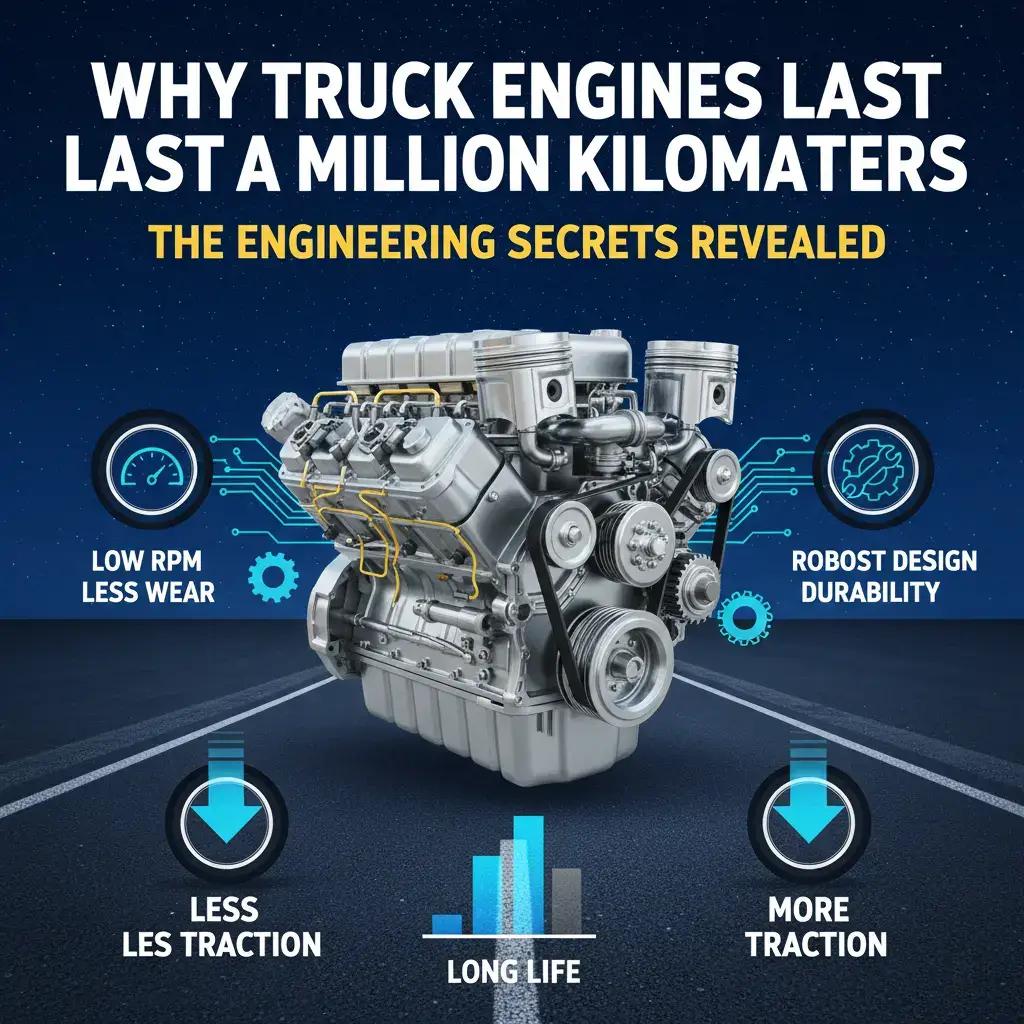
Why Truck Engines Last a Million Kilometers Why Truck Engines Last a Million Kilometers When people hear that some truck engines routinely exceed 1,000,000 km, the reaction is usually disbelief. Many assume it’s because trucks “drive slowly” or because diesel engines are “stronger by default.” That’s incomplete and lazy thinking. The real reason truck engines last so long is engineering philosophy. Trucks are designed around continuous load, thermal stability, and mechanical margins, not short-term performance or marketing numbers. Let’s break it down properly. 1. Truck Engines Are Understressed by Design This is the number one reason, and nothing else comes close. A typical passenger car engine might: Produce 80–120 hp per liter Regularly operate near its RPM limit Be optimized for weight, emissions, and cost A heavy-duty truck engine: Produces 20–40 hp per liter Operates at low RPM (1,200–1,800 rpm) Is designed to run fully loaded for hours Lower specific output = lower internal stress. Less stress means: Lower bearing loads Lower piston speed Less heat concentration Slower wear over time This alone explains why truck engines age slowly. 2. Low RPM = Massive Longevity Gains Engine wear is strongly correlated with mean piston speed and cycles per kilometer. A car engine at 3,000 rpm: Completes ~50 revolutions per second A truck engine at 1,500 rpm: Completes half that Over 1 million kilometers: The truck engine experiences tens of millions fewer combustion cycles Fewer cycles = less: Ring wear Cylinder wall wear Bearing fatigue Valve train stress RPM kills engines long before kilometers do. 3. Heavy-Duty Internal Components Truck engines use materials and dimensions that would be considered overkill in cars. Common features: Forged steel crankshafts Thick cylinder liners Oversized bearings Large oil capacities (30–40 liters) Massive cooling jackets These engines are not designed to be light.They are designed to survive continuous punishment. Passenger cars trade durability margin for: Fuel economy Emissions Weight Cost Trucks don’t. 4. Superior Cooling and Thermal Stability Heat is the silent engine killer. Truck engines: Run at lower RPM Produce torque at low speed Have enormous cooling systems This leads to: Stable combustion temperatures Less oil breakdown Reduced thermal expansion stress A car engine experiences constant heat spikes: Cold start Short trips Stop-and-go traffic A truck engine: Warms up once Stays at operating temperature for hours Thermal stability dramatically increases engine life. 5. Diesel Combustion Is Slower and Gentler Diesel engines don’t rev high — and that’s a feature, not a flaw. Diesel characteristics: Higher compression Slower flame front Longer power stroke Lower peak RPM This results in: Smoother torque delivery Lower shock loads on bearings Reduced valve train stress Modern diesel emissions systems reduce reliability around the engine — but the core engine block remains extremely durable. 6. Constant Load Is Better Than Variable Load This sounds counterintuitive, but it’s true. Truck engines: Operate at steady RPM Pull consistent loads Avoid rapid throttle changes Car engines: Constant acceleration/deceleration Frequent cold starts High transient loads Engines wear fastest during: Cold starts Rapid RPM changes High thermal swings Trucks avoid all three most of the time. 7. Maintenance Is Non-Negotiable Trucks survive because: Oil changes are frequent Fluids are monitored Filters are oversized Failures are expensive, so prevention is strict A truck engine doesn’t survive abuse.It survives discipline. Engines that reach a million kilometers are not “lucky” — they are maintained correctly. 8. Engine Speed Matters More Than Speed on the Road This is the final truth. A truck cruising at 90 km/h: Engine spinning at ~1,300 rpm A car at 120 km/h: Engine spinning at ~2,800 rpm Over long distances, engine RPM exposure, not road speed, determines lifespan. Final Reality Check Truck engines last a million kilometers because: They are underpowered on purpose They run slowly They are massively overbuilt They operate under stable conditions They are maintained seriously If you build a car engine the same way, it would also last forever — but it would: Be heavy Be expensive Fail emissions targets Sell poorly Longevity is a choice, not a mystery. External Technical & Scientific Sources Cummins – Engine Design for Durabilityhttps://www.cummins.com/engines SAE International – Heavy-Duty Diesel Engine Designhttps://www.sae.org/publications/technical-papers Wikipedia – Diesel Engine Operating Characteristicshttps://en.wikipedia.org/wiki/Diesel_engine Engineering Explained – Why Diesel Engines Last So Longhttps://www.youtube.com/watch?v=6hF5U8vHk8M
Weight Transfer Under Acceleration — The Physics Nobody Talks About

Weight Transfer Under Acceleration — The Physics Nobody Talks About When people talk about fast cars, they obsess over horsepower, torque figures, and 0–100 km/h times. What almost nobody explains properly is weight transfer — a fundamental physical phenomenon that often decides whether a car launches hard or spins its tires uselessly. Weight transfer is not marketing. It is not tuning folklore. It is pure Newtonian physics, and it applies to every vehicle that accelerates, from economy hatchbacks to hypercars. What Is Weight Transfer? Weight transfer is the redistribution of vertical load on a vehicle’s tires caused by acceleration or deceleration. When a car accelerates: The rear tires gain vertical load The front tires lose vertical load This happens because the car’s center of mass is above the ground. When acceleration force is applied at the tire contact patch, a rotational moment is created around the center of mass, pushing the rear downward and lifting the front. Important correction: Mass does NOT move backward. Load transfers — not mass. This distinction matters, and most people get it wrong. The Physics Behind It (Simple but Precise) The amount of longitudinal weight transfer is governed by this relationship: Weight Transfer ∝ (Acceleration × Center of Mass Height) ÷ Wheelbase That means: Higher acceleration = more weight transfer Higher center of mass = more weight transfer Shorter wheelbase = more aggressive weight transfer Nothing here mentions horsepower directly — because horsepower does not cause grip. Why Weight Transfer Controls Acceleration Tires generate grip based on normal force (vertical load). When the rear tires receive more load during acceleration, they can generate more longitudinal force up to a limit. This is why: Rear-wheel-drive cars benefit from acceleration Front-wheel-drive cars struggle off the line AWD systems exist to exploit load distribution If the driven wheels do not have enough vertical load, they will spin — no matter how much power the engine produces. Why FWD Cars Struggle From a Standstill During hard acceleration: Weight transfers away from the front Front tires lose grip Wheelspin occurs easily This is why powerful FWD cars: Require electronic torque limiting Suffer from torque steer Feel strong in rolling acceleration but weak from a stop This is not a drivetrain “weakness” — it’s physics working against them. Why RWD Works So Well for Performance Cars Rear-wheel-drive benefits directly from weight transfer: Rear tires get heavier under acceleration Grip increases naturally Power can be applied more progressively This is why: Drag cars are RWD Supercars remain RWD Track cars prefer RWD for throttle control RWD doesn’t magically create grip — weight transfer feeds it grip. AWD: Not Magic, Just Load Management AWD does not remove physics. It redistributes torque to compensate for load imbalance. AWD works best when: Front tires lose some grip Rear tires gain grip Torque is actively shifted rearward This is why modern performance AWD systems are rear-biased, not 50/50. AWD improves consistency, not physics. Why Center of Gravity Height Matters SUVs and tall cars experience more weight transfer because their center of mass is higher. This causes: More rear squat More front lift Less steering precision under acceleration This is why performance cars: Sit low Use stiff suspension Minimize body movement Lower center of gravity = controlled weight transfer, not elimination. Suspension’s Role in Weight Transfer Key truth: Suspension does NOT change how much weight transfers It changes how FAST it transfers Soft suspension: Slower weight transfer More body movement Better traction on uneven surfaces Stiff suspension: Faster transfer Sharper response Better control on smooth roads This is why drag cars use soft rear suspension, while track cars go stiff. Why Horsepower Alone Is Useless Without Weight Transfer You can add: Bigger turbos More boost Higher RPM But if the driven tires cannot accept load, you gain nothing. This is why: 300 hp cars beat 500 hp cars off the line Tires matter more than engines Chassis setup beats dyno numbers Power is only useful after grip is available. Real-World Example Two cars: Car A: 400 hp, FWD Car B: 300 hp, RWD From a stop: Car A spins Car B launches cleanly From a roll: Car A suddenly feels fast Nothing changed except weight transfer behavior. Final Truth (No Mercy) If someone talks about acceleration without mentioning weight transfer: They don’t understand vehicle dynamics They’re repeating surface-level car content Their conclusions are incomplete Weight transfer is not optional knowledge.It is the foundation of acceleration physics. Ignore it, and you’ll keep believing horsepower myths. External Scientific & Technical Sources Engineering Explained – Vehicle Dynamics Basicshttps://www.youtube.com/watch?v=9g3dJcYb9gk Milliken & Milliken – Race Car Vehicle Dynamics (Reference Text)https://www.sae.org/publications/books/content/r-146/ Wikipedia – Weight Transfer (Physics Overview)https://en.wikipedia.org/wiki/Weight_transfer Tire Load Sensitivity (SAE Technical Explanation)https://www.sae.org/publications/technical-papers/content/980909/
Renault Filante Record Breaks the 1,000-Kilometer Barrier in a Landmark Electric Vehicle Test
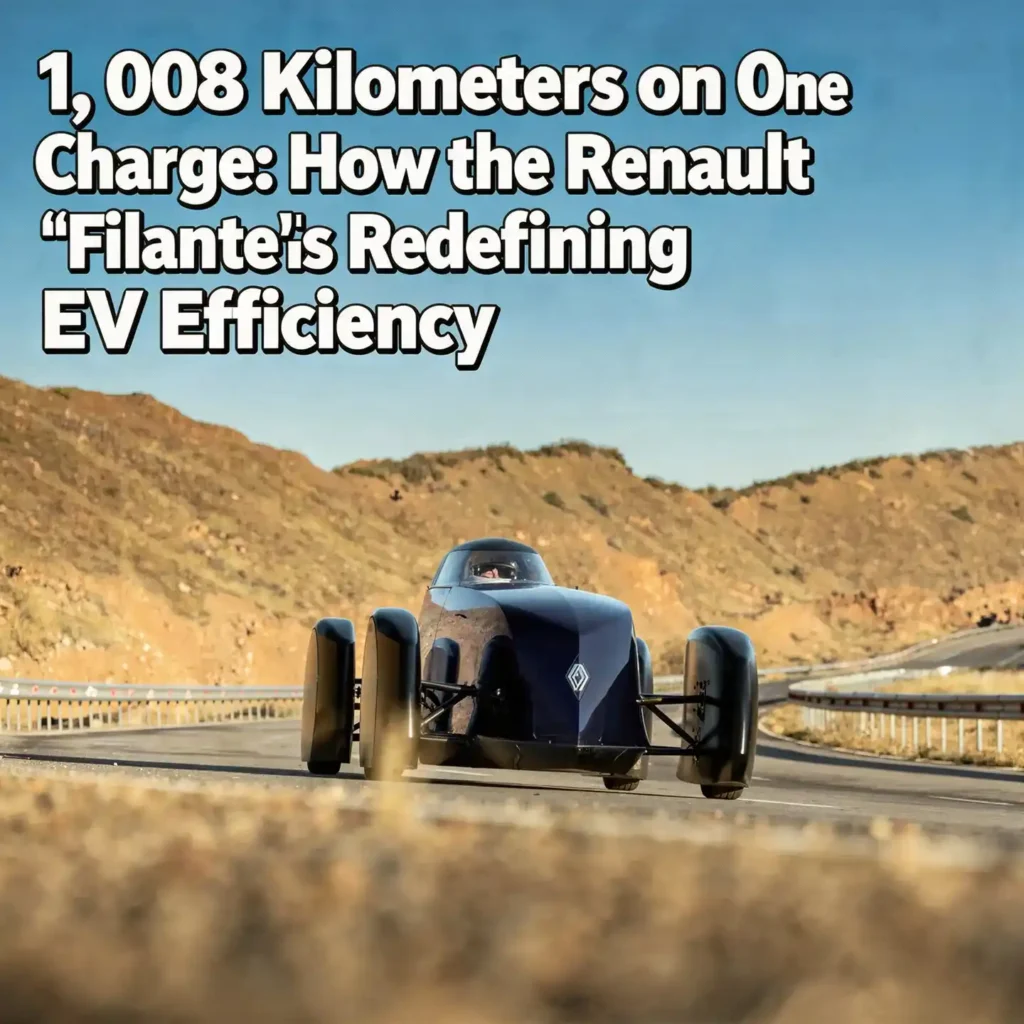
Renault Filante Record Breaks the 1,000-Kilometer Barrier in a Landmark Electric Vehicle Test A Historic Achievement for Renault in the Electric Vehicle Range Challenge Renault Filante Record has officially rewritten the rules of electric vehicle efficiency. In a landmark achievement for the automotive industry, Renault’s experimental electric concept car successfully covered 1,008 kilometers on a single charge, breaking the symbolic 1,000-kilometer barrier and setting a new benchmark for EV range. Unveiled roughly a year earlier, the Renault Filante Record 2025 concept was never designed to chase outright speed. Unlike the legendary Renault 40 CV (1925) or the futuristic Étoile Filante (1956)—both known for their speed-oriented records—the Filante Record was engineered with a singular goal: maximizing driving range through extreme efficiency. From the outset, Renault aimed to achieve autonomy figures that initially seemed unrealistic for a battery-electric vehicle. Record Attempt Conducted in Morocco After nearly a year of intensive development and validation in wind tunnels, Renault carried out the official record attempt on December 18 at the UTAC test track in Morocco. The test had originally been scheduled for October in France, but adverse weather conditions forced Renault to postpone and relocate the attempt. Morocco provided stable environmental conditions that allowed Renault engineers to maintain consistent speeds and closely monitor energy consumption, ensuring the validity and credibility of the result. Renault Sets a New Electric Vehicle Range Record Compared to the first prototype, the final version of the Filante Record features major aerodynamic refinements. Most notably, aerodynamic wheel covers mounted directly onto the wheels significantly improved airflow management. While the original drag coefficient stood at 0.40 Cd, Renault’s engineers targeted a figure closer to 0.30 Cd, a dramatic improvement for an electric vehicle. This evolution underlines the importance of wheel aerodynamics. Without fairings, airflow impacts the upper section of a rotating tire at a relative speed equivalent to twice the vehicle’s forward velocity, dramatically increasing drag. By addressing this often-overlooked factor, Renault achieved substantial efficiency gains. The central structure of the vehicle—characterized by a Formula 1-style driving position and a cockpit inspired by fighter jet canopies—remained largely unchanged. However, air intake openings were minimized to further reduce aerodynamic resistance. Renault also partnered with Michelin to develop custom low-rolling-resistance tires, specifically tailored for the Filante Record project. A Concept Car Weighing Just 1,000 Kilograms Efficiency was not achieved through aerodynamics alone. The Renault Filante Record integrates steer-by-wire and brake-by-wire systems, eliminating traditional mechanical linkages. These technologies provide greater freedom in chassis design while delivering meaningful weight savings. The steer-by-wire system itself had previously been validated in industry testing, notably by Lexus. To push weight reduction even further, Renault relied on carbon fiber, aluminum alloys, and Scalmalloy, an advanced high-strength material produced using 3D printing technology. As a result, the total vehicle weight was limited to just 1,000 kilograms, an exceptional figure for an electric car. Of this, 600 kilograms account for the 87 kWh battery, which is notably the same battery used in the production Renault Scenic E-Tech Electric, currently sold through Renault dealerships. 1,008 Kilometers on a Single Charge at 102 km/h Renault deliberately chose real-world driving conditions for the record attempt. The goal was to maintain an average speed of around 100 km/h for nearly 10 hours, rather than conducting a slow, laboratory-style efficiency test. The Filante Record completed 239 laps of a 4-kilometer circuit, driven by three professional drivers: Laurent Hurgon, Constance Leraud-Risser, and Arthur Ferrier. Hurgon began the run at 7:50 a.m., driving for 3 hours and 20 minutes. Leraud-Risser then took over for four hours, with Ferrier completing the final 2 hours and 40 minutes as night conditions set in. After 9 hours and 52 minutes of continuous driving, excluding just 7 minutes total for driver changes, the Renault Filante Record covered 1,008 kilometers without any recharging, maintaining an average speed of 102 km/h. 7.8 kWh/100 km Consumption and Future Implications The officially recorded energy consumption was an astonishing 7.8 kWh per 100 kilometers, a figure rarely seen even in the most efficient production EVs. Renault also confirmed that 11% of the battery capacity remained unused, meaning the car could have traveled approximately 120 additional kilometers at speeds above 100 km/h. These numbers rival, and in some cases exceed, the efficiency levels typically associated with E-REV (Extended-Range Electric Vehicles)—without relying on a combustion engine. What This Means for the Future of Electric Vehicles This achievement sends a clear message: electric vehicle range is no longer an insurmountable limitation. By combining lightweight construction, advanced aerodynamics, and intelligent energy management, manufacturers can dramatically extend range without increasing battery size. Equally important, Renault now possesses a fully functional steer-by-wire system, which is expected to reach future production models—mirroring industry trends hinted at by concepts such as Peugeot Inception. While the Filante Record itself will not enter production, the technologies behind it are likely to shape the next generation of Renault electric vehicles. Sources Renault Group – Official Press Releases : https://media.renaultgroup.com/?lang=eng UTAC – Automotive Testing and Certification Organization : https://www.utac.com/ Michelin – Tire Technology and Low Rolling Resistance Solutions : https://b2b.middle-east.michelin.com/by-technology You may love to see.. Turbo vs SuperCharger : Which One Truly Delivers More Power? Turbocharger vs Supercharger: Which One Truly Delivers More Power? TurboCharger Runs on exhaust gases. The hot air leaving the engine… Read More → 0–100 km/h Times Are Misleading: Here’s What Actually Matters 0–100 km/h Times Are Misleading: Here’s What Actually Matters Introduction When car lovers compare performance, one number almost always… Read More → The Electric ‘Holy Grail’: Why Solid-State Batteries Will Change EVs Forever (And Why We Care in 2026) The Electric ‘Holy Grail’: Why Solid-State Batteries Will Change EVs Forever (And Why We Care in 2026) The electric vehicle… Read More →
Why Did China Restrict One-Pedal Driving in Electric Vehicles?
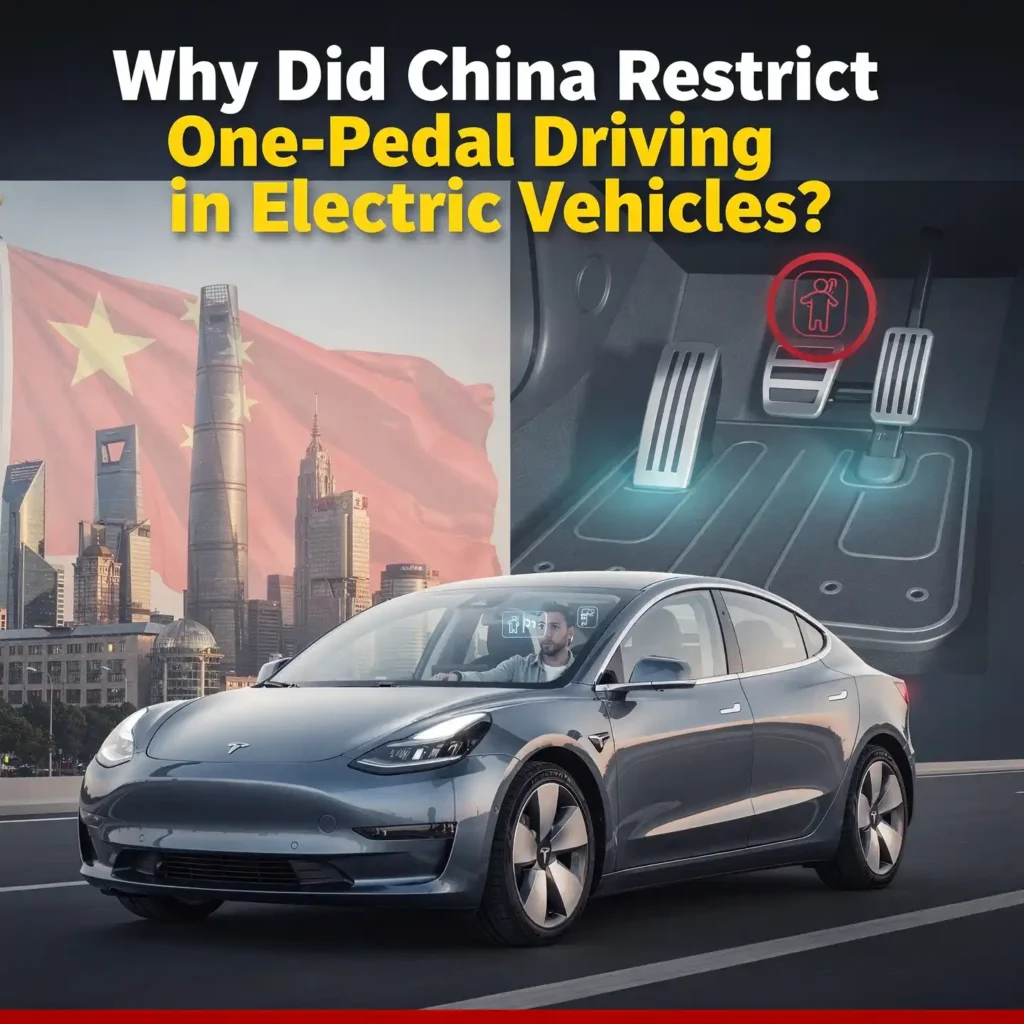
Why Did China Restrict One-Pedal Driving in Electric Vehicles? As the global electric vehicle (EV) market continues to expand at an unprecedented pace, advanced driving technologies are increasingly shaping the future of mobility. One of the most distinctive innovations in electric and plug-in hybrid vehicles is one-pedal driving, a feature designed to simplify driving while improving energy efficiency. Recently, China announced a new national automotive regulation, GB 21670–2025, which introduces new rules governing one-pedal driving. Contrary to some reports, the regulation does not ban the technology outright. Instead, it limits how it is implemented, particularly by preventing it from being enabled by default in new vehicles. This decision has sparked global debate, raising important questions about safety, driver behavior, and the role of regulation in emerging vehicle technologies. What Is One-Pedal Driving? One-pedal driving allows drivers to control a vehicle’s speed using only the accelerator pedal. Under this system, the vehicle: Accelerates when the accelerator pedal is pressed Decelerates when the driver lifts their foot Can, in many cases, come to a complete stop without using the brake pedal This behavior is enabled by regenerative braking, a technology that converts kinetic energy produced during deceleration into electrical energy, which is then fed back into the vehicle’s battery. As a result, one-pedal driving offers several advantages: Improved energy efficiency Extended driving range Reduced wear on conventional braking components Due to these benefits, one-pedal driving has become especially popular among EV drivers, particularly in dense urban environments where frequent stopping is common. Did China Ban One-Pedal Driving? The short answer is no. China has not banned one-pedal driving. Instead, regulators have decided to: Prohibit one-pedal driving from being activated as a default factory setting Allow drivers to enable it manually as an optional feature, if the vehicle is equipped with the system This distinction highlights China’s regulatory approach, which focuses on risk management and driver awareness rather than outright technological restriction. The Main Reason Behind the Decision: Road Safety According to studies conducted by Chinese regulatory authorities, several safety concerns were identified: Some drivers become overly dependent on regenerative braking This dependency can delay reaction times when maximum braking force is required In certain emergency situations, regenerative braking alone does not provide sufficient stopping power Regulators concluded that enabling one-pedal driving by default could create a false sense of security, particularly for inexperienced drivers or those unfamiliar with how regenerative braking behaves under critical conditions. By requiring drivers to manually activate the feature, authorities aim to ensure that users are consciously aware of how the system works before relying on it in real-world driving scenarios. What Does the GB 21670–2025 Standard Include? The GB 21670–2025 regulation goes beyond one-pedal driving and introduces a broader set of safety requirements, which will be implemented gradually through 2027. 1. Brake Lights During Deceleration Starting January 1, 2026: Brake lights must automatically illuminate When vehicle deceleration exceeds 1.3 m/s² Even if the brake pedal is not pressed This measure is intended to alert following drivers and significantly reduce the risk of rear-end collisions, especially in traffic conditions where regenerative braking causes rapid deceleration. 2. Mandatory ABS Systems The standard also mandates that: All new electric vehicles must be equipped with Anti-lock Braking Systems (ABS) ABS technology helps to: Improve vehicle control during emergency braking Prevent wheel lock-up and skidding Shorten stopping distances Reduce accident rates and insurance costs Balancing Innovation and Safety Automotive experts widely view these regulatory changes as: Evidence that regulators are not opposed to technological innovation An effort to create a more mature and standardized regulatory framework for EV technologies A move toward improving driver education and responsibility While one-pedal driving remains efficient and convenient, experts emphasize that it requires a clear understanding of vehicle behavior, particularly during emergency braking situations. What Does This Mean for the Future of Electric Vehicles? China’s decision reflects several broader trends: The growing maturity of the EV market A transition from rapid adoption to structured regulation A strong emphasis on safety alongside environmental and energy efficiency goals These standards are expected to: Influence global automakers operating in the Chinese market Shape future EV system designs worldwide Potentially serve as a regulatory benchmark for other countries considering similar measures Conclusion China is not targeting one-pedal driving itself, but rather regulating how and when it is used. The primary objectives of the GB 21670–2025 standard are to: Reduce road safety risks Ensure faster and more appropriate driver responses in emergencies Preserve the efficiency benefits of regenerative braking without compromising safety This approach reinforces a key message for the future of electric mobility: innovation must be paired with responsible and safety-focused regulation. Sources SlashGear – Electric Vehicle Safety & One-Pedal Driving : https://www.slashgear.com/2055079/china-one-pedal-driving-ban-explained/ Ministry of Industry and Information Technology (MIIT), China : https://www.uschina.org/wp-content/uploads/2020/12/30_miit_organization_chart.pdf International Energy Agency (IEA) – Global EV Safety Standards : https://www.iea.org/reports/global-ev-outlook-2025 You may love to see.. The unreleased X16 engine December 2, 2025 | by khalid byad The SGP Sla 16 (Porsche Type 203): The Advanced Tank Engine That Never Made It to War A New Engine… Read More → Why AWD Isn’t Always Faster Than RWD in Real-World Driving December 18, 2025 | by khalid byad Why AWD Isn’t Always Faster Than RWD in Real-World Driving All-Wheel Drive (AWD) has a reputation for being the ultimate… Read More → German vs Japanese Reliability: Updated 2025 Analysis December 12, 2025 | by khalid byad German vs Japanese Reliability: Updated 2025 Analysis German vs Japanese Reliability: Updated 2025 Analysis For decades, the debate has been… Read More →