Why Some Supercars Still Use Rear-Wheel Drive(RWD) Instead of AWD
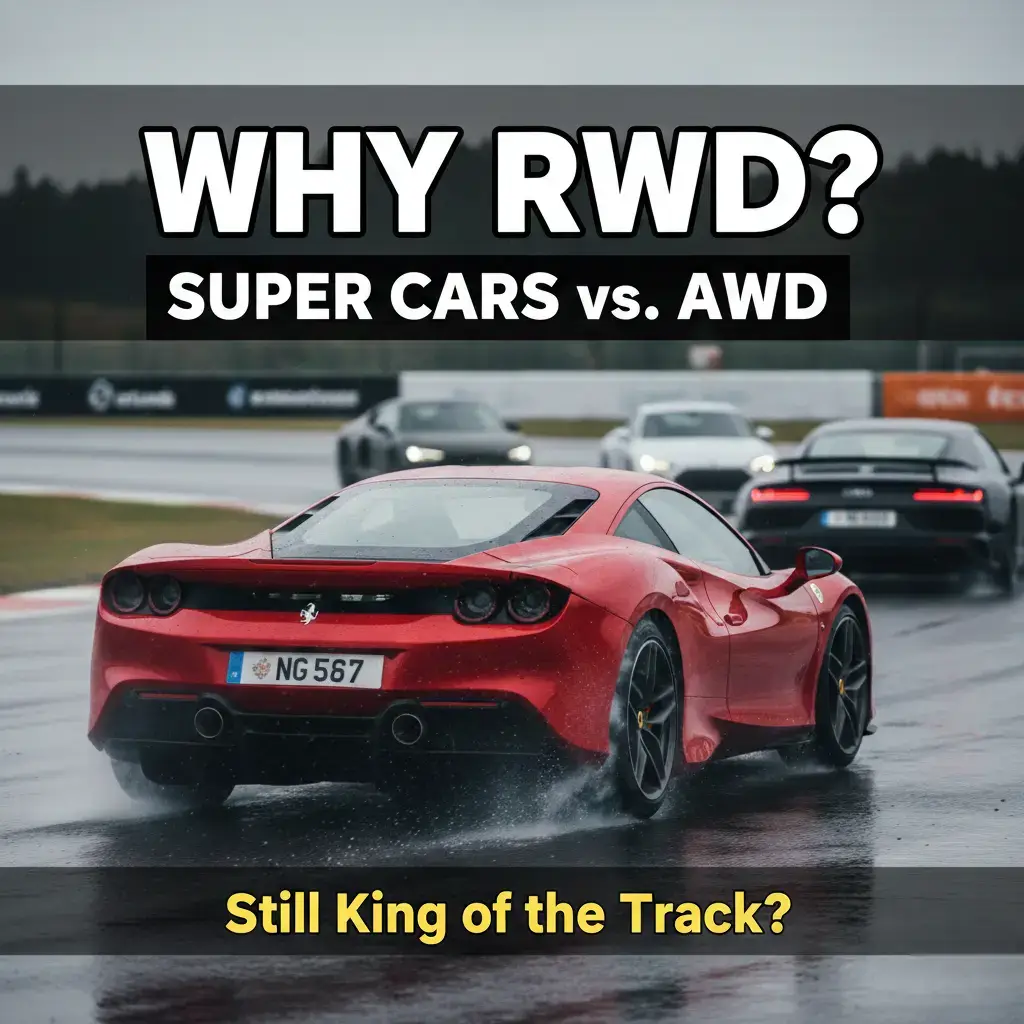
Why supercars still use RWD instead of AWD ? The Physics, Engineering, and Driver Feel Behind the Decision Introduction In the modern automotive world, all-wheel drive (AWD) is often marketed as the ultimate performance solution. More grip, faster launches, and better control — at least on paper. Yet, when you look closely at some of the world’s most respected supercars and track-focused machines, a surprising number of them still rely on rear-wheel drive (RWD). This isn’t tradition. It isn’t cost-cutting. And it’s definitely not outdated thinking.The reason is simple and brutal: physics doesn’t care about marketing. Supercar engineers choose RWD in many cases because it delivers better balance, purer steering feedback, lower mass, and more predictable high-speed behavior — all critical factors when performance matters beyond straight-line acceleration. Let’s break down exactly why RWD still survives — and thrives — in supercars. 1. AWD Improves Launches, Not Driving Feel AWD’s biggest advantage is obvious: traction from a standstill.By driving all four wheels, torque is distributed across a larger contact patch, allowing harder launches and quicker 0–100 km/h times. However, supercars are not designed only for drag races. Once the car is moving — especially above 60–80 km/h — traction is no longer the main limitation. At that point, factors like: become far more important. AWD systems add front driveshafts, differentials, transfer cases, and clutches, all of which increase complexity and mass. This extra hardware dulls steering feedback and reduces the “connected” feeling that elite drivers demand. 2. Weight Is the Silent Performance Killer AWD systems are heavy. Even advanced, lightweight systems typically add 60–100 kg compared to an equivalent RWD setup. That extra mass: Supercars prioritize power-to-weight ratio and rotational inertia over raw grip. A lighter RWD car can often be faster on a technical circuit than a heavier AWD car with more traction. This is why many track-focused variants remove AWD, even when it exists on the road version. 3. Steering Purity: Why Front Wheels Should Only Steer In an RWD car, the front wheels have one job: steering.In an AWD car, the front wheels must: This compromises steering clarity. When torque is sent through the front axle, it introduces: Supercar engineers obsess over front-end feel. The moment steering becomes filtered or corrupted by drivetrain forces, the car loses precision. RWD preserves clean, uncorrupted steering input, which is essential at high speeds and on track. 4. Throttle Control and Corner Rotation One of the biggest reasons purists love RWD is throttle-induced rotation. In a rear-wheel-drive supercar: AWD systems tend to pull the car straight under power, reducing this rotation. While this makes the car safer and easier to drive fast, it also makes it less engaging and less adjustable. Many manufacturers intentionally choose RWD to preserve this driver-controlled balance, especially for track-oriented models. 5. AWD Can Mask Poor Chassis Balance Here’s a hard truth:AWD can hide bad weight distribution. By forcing grip through the front wheels, AWD compensates for cars that would otherwise struggle with traction or stability. RWD, on the other hand, exposes balance flaws immediately. This is why high-end manufacturers with excellent chassis engineering are confident using RWD — because their platforms are already optimized around: If the architecture is right, AWD becomes unnecessary. 6. Real-World Examples That Prove the Point Several legendary supercars stayed RWD on purpose: These cars sacrifice a few tenths in acceleration but deliver superior driver involvement, lighter feel, and sharper dynamics. Manufacturers often reserve AWD for: Not pure driving. Conclusion: RWD Is a Choice, Not a Limitation Rear-wheel drive in supercars is not about nostalgia.It’s about precision, balance, and control. AWD wins drag races.RWD wins hearts, steering feel, and driver engagement. For manufacturers building machines meant to communicate with the driver, RWD remains the superior architecture — even in a world obsessed with numbers. Physics hasn’t changed.Only marketing has. External Sources (Technical & Physics-Based) Engineering analysis of AWD vs RWD systemshttps://www.howacarworks.com/basics/front-wheel-drive-rear-wheel-drive-and-all-wheel-drive Vehicle dynamics and weight transfer fundamentalshttps://en.wikipedia.org/wiki/Vehicle_dynamics Drivetrain layouts and handling characteristicshttps://www.carthrottle.com/post/why-rear-wheel-drive-cars-handle-better/
Electric vs Hybrid Cars: Which Is the Smarter Choice in 2026?
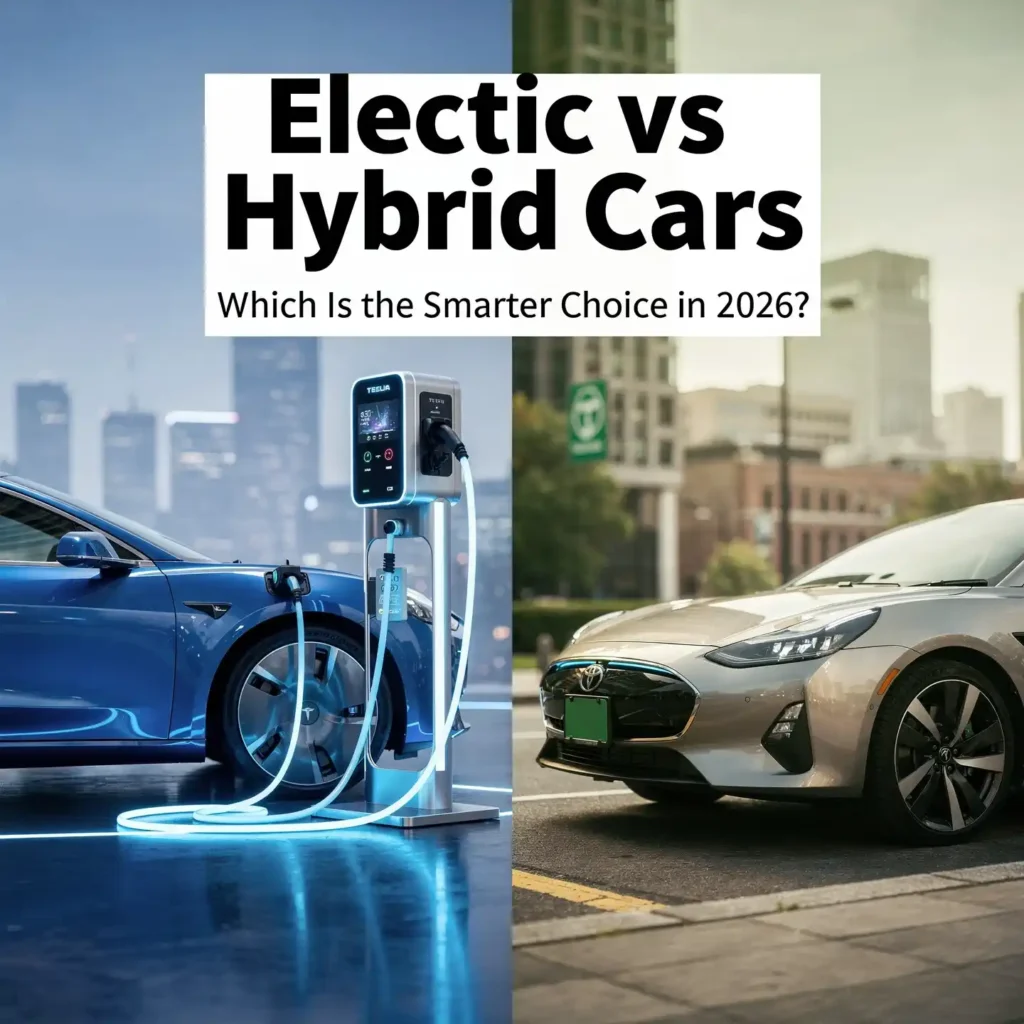
Electric vs Hybrid Cars: Which Is the Smarter Choice in 2026? Electric and hybrid vehicles are no longer niche options reserved for early adopters. In 2026, they are central to the global automotive market, driven by stricter emissions regulations, rising fuel costs, and rapid technological innovation. However, many buyers still face the same question: should you choose an electric car or a hybrid car? While both options promise lower emissions and improved efficiency compared to traditional gasoline vehicles, they differ significantly in cost, performance, infrastructure requirements, and long-term ownership experience. This article provides a clear, practical comparison to help you make an informed decision. What Is an Electric Car? An electric vehicle (EV) is powered exclusively by electricity stored in a battery pack. It does not use gasoline or diesel and produces zero tailpipe emissions. Key Characteristics of Electric Cars Fully electric motor with no internal combustion engine Requires charging via home chargers or public charging stations Lower running and maintenance costs Instant torque and smooth acceleration Popular electric cars in 2025 include the Tesla Model 3, BYD Seal, Hyundai Ioniq 6, and Volkswagen ID.4. What Is a Hybrid Car? A hybrid vehicle (HEV) combines a gasoline engine with an electric motor and a small battery. The battery is charged automatically through regenerative braking and the engine itself—no external charging required. Key Characteristics of Hybrid Cars Uses both fuel and electric power Better fuel efficiency than conventional cars No need for charging infrastructure Longer driving range than most EVs Common hybrid models include the Toyota Corolla Hybrid, Toyota Prius, Honda Accord Hybrid, and Ford Escape Hybrid. Cost Comparison: Electric vs Hybrid Purchase Price Electric cars generally have a higher upfront cost due to large battery packs. However, prices are decreasing as battery technology improves. Hybrids usually cost less than EVs but more than standard gasoline cars. Running and Maintenance Costs Electric cars: Lower energy cost per kilometer and fewer moving parts, resulting in reduced maintenance expenses. Hybrid cars: Still require oil changes and engine maintenance, though fuel savings are significant. Over long-term ownership, EVs often become more cost-effective, especially in regions with electricity incentives. Charging and Refueling Convenience This is a decisive factor for many buyers. Electric vehicles require access to charging stations or a home charger. Charging times range from 20 minutes (fast charging) to several hours. Hybrid vehicles refuel at any gas station and do not depend on charging infrastructure. If you live in an area with limited charging stations, a hybrid may be the more practical option. Environmental Impact Electric cars are considered the cleanest option during daily use, producing zero emissions while driving. However, battery production has an environmental footprint. Hybrid cars still emit CO₂ but significantly less than traditional vehicles. In countries where electricity comes from renewable sources, EVs have a clear environmental advantage. Performance and Driving Experience Electric cars deliver instant torque, making them faster off the line and smoother to drive. They are also quieter, which enhances comfort. Hybrid cars prioritize efficiency over performance, but modern systems deliver balanced acceleration and refined driving suitable for daily use. Which One Should You Choose? Choose an electric car if: You have access to reliable charging You want the lowest running costs You prioritize zero emissions and future-proof technology Choose a hybrid car if: You frequently drive long distances Charging infrastructure is limited in your area You want fuel efficiency without changing driving habits finally Both electric and hybrid cars are excellent alternatives to traditional vehicles in 2026. Electric cars represent the future of mobility, while hybrids serve as a practical transition technology. The right choice depends on your lifestyle, driving patterns, and local infrastructure. As technology evolves, both options will continue to improve in affordability, efficiency, and performance. Sources International Energy Agency (IEA) – Global EV Outlookhttps://www.iea.org/reports/global-ev-outlook-2024 U.S. Department of Energy – Electric Vehicles Explainedhttps://www.energy.gov/eere/electricvehicles MotorTrend – Hybrid vs Electric Cars Comparisonhttps://www.motortrend.com/features/hybrid-vs-electric-cars/ You may love to see.. The Reality of the Driverless Car: Where We Are Now (and Why We Aren’t All Level 5 Yet) December 9, 2025 | by khalid byad The Reality of the Driverless Car: Where We Are Now (and Why We Aren’t All Level 5 Yet) 1. The… Read More → From Copycat to King: The Unstoppable Rise of Chinese Automotive Power. December 4, 2025 | by Ouanzig Abdessamade China: From Imitator to Global Leader in the Automotive Industry The global automotive industry has witnessed a seismic shift, with… Read More → Electric vs Hybrid Cars: Which Is the Smarter Choice in 2026? December 22, 2025 | by Ouanzig Abdessamade Electric vs Hybrid Cars: Which Is the Smarter Choice in 2026? Electric and hybrid vehicles are no longer niche options… Read More →
The Physics of Rolling Resistance: The Acceleration Killer Nobody Talks About
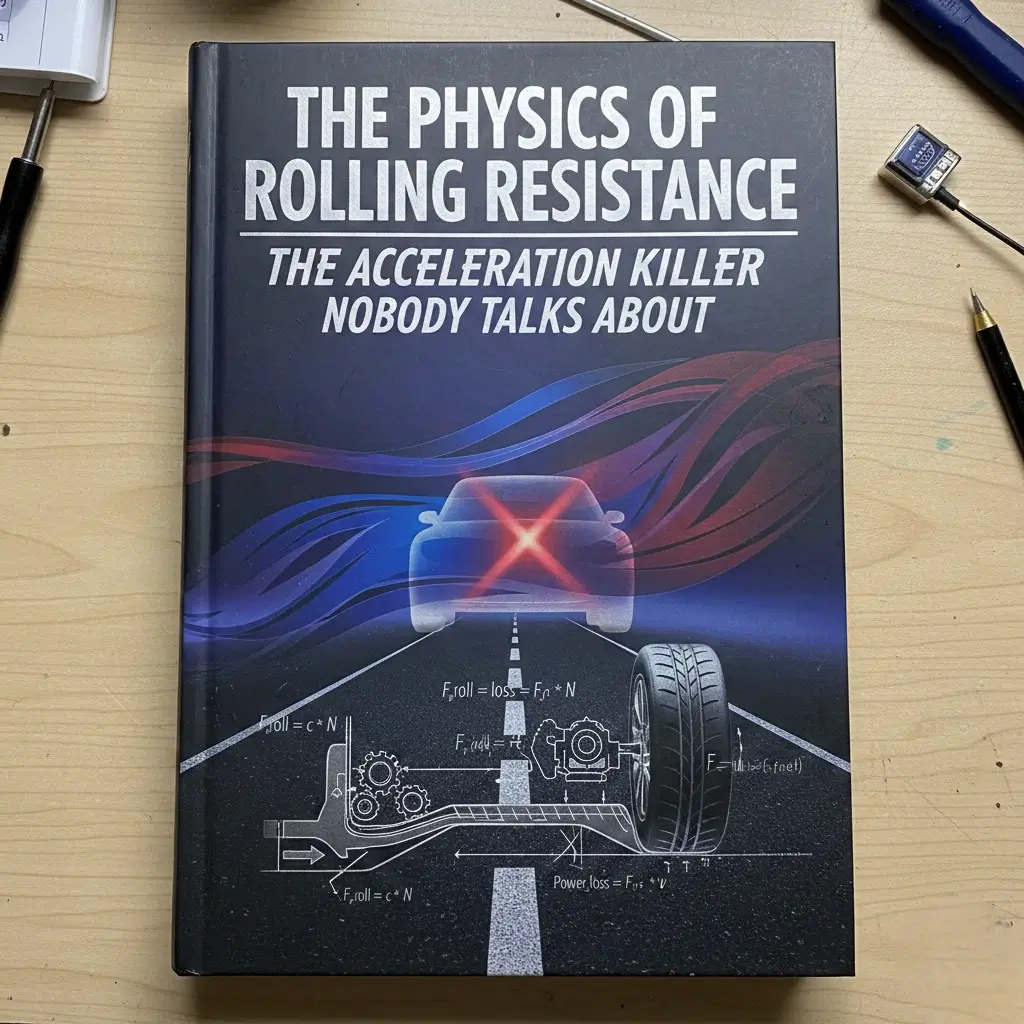
The Physics of Rolling Resistance: The Acceleration Killer Nobody Talks About When people talk about acceleration, the discussion usually revolves around horsepower, torque, or drivetrain layout. Very few mention rolling resistance, yet it quietly robs vehicles of performance every single second they move. Unlike aerodynamic drag—which dominates at high speed—rolling resistance is present from 0 km/h, making it a direct enemy of acceleration. If you’re trying to understand why two cars with similar power feel completely different off the line, rolling resistance is part of the answer. What Is Rolling Resistance? Rolling resistance is the force that opposes motion when a tire rolls on a surface. It comes mainly from: Tire deformation Energy loss in rubber (hysteresis) Surface friction at the contact patch Micro-slippage between tire and road Every time a tire rotates, it deforms, heats up, and loses energy. That lost energy does not go into forward motion—it turns into heat. From a physics standpoint, rolling resistance is expressed as: Frr=Crr×NF_{rr} = C_{rr} times NFrr=Crr×N Where: FrrF_{rr}Frr = rolling resistance force CrrC_{rr}Crr = rolling resistance coefficient NNN = normal force (vehicle weight) This equation already reveals the problem: heavier vehicles suffer more rolling resistance, regardless of power output. Why Rolling Resistance Hurts Acceleration Acceleration is governed by Newton’s Second Law: Fnet=m×aF_{net} = m times aFnet=m×a The net force accelerating the car forward is: Fengine−(Frolling+Faero+drivetrainlosses)F_{engine} – (F_{rolling} + F_{aero} + drivetrain losses)Fengine−(Frolling+Faero+drivetrainlosses) At low speeds (0–60 km/h), aerodynamic drag is minimal. That means rolling resistance becomes one of the dominant opposing forces. So if rolling resistance increases: Less force reaches the wheels Acceleration decreases Throttle response feels duller 0–100 km/h times suffer This is why small changes in tires can dramatically change how fast a car feels, even when horsepower stays the same. Tire Design: Where Performance Is Won or Lost Not all tires are equal. Rolling resistance depends heavily on tire construction. Factors That Increase Rolling Resistance Softer rubber compounds Aggressive tread patterns Wider tires Lower tire pressure Heavy tire and wheel assemblies Performance tires usually have higher rolling resistance because grip-focused compounds deform more under load. That deformation costs energy. This is why: Economy cars feel “light” and eager Performance cars sometimes feel slower than expected at low speed EV manufacturers obsess over tire efficiency Why Electric Cars Care So Much About Rolling Resistance Electric vehicles made rolling resistance mainstream—not for performance, but for range. Since EV motors deliver instant torque, any unnecessary resistance: Reduces acceleration efficiency Kills battery range Forces higher energy draw That’s why EV-specific tires exist. They use: Stiffer sidewalls Low-hysteresis rubber Optimized tread blocks The result? Lower rolling resistance, better efficiency, and improved real-world acceleration—despite identical motor power. Rolling Resistance vs Aerodynamic Drag Many people confuse the two. Here’s the reality: Speed Range Dominant Resistance 0–50 km/h Rolling resistance 50–90 km/h Mixed 90+ km/h Aerodynamic drag This means launch performance and city acceleration are strongly influenced by rolling resistance, not wind resistance. If your car feels lazy in traffic but fine on the highway, rolling resistance is likely part of the problem. Weight, Load, and Real-World Driving Add passengers, cargo, or larger wheels—and rolling resistance increases immediately. That’s why: Heavily loaded cars accelerate slower SUVs feel sluggish compared to sedans with similar engines Larger rims often hurt acceleration even if they look “sporty” This is pure physics. No tuning, no marketing, no excuses. Can You Reduce Rolling Resistance? Yes—but every choice has trade-offs. What Actually Helps Proper tire pressure (science-backed, not optional) Lighter wheels Narrower tires (within safety limits) Low rolling resistance tire compounds What Doesn’t Engine tuning alone Louder exhausts Weight reduction without tire optimization If someone claims acceleration gains while ignoring rolling resistance, they’re selling illusion—not performance. Final Verdict: Is Rolling Resistance Worth Caring About? Absolutely. Ignoring rolling resistance means misunderstanding how acceleration works in the real world. If your goal is: Faster launches Better city driving response Improved efficiency without touching the engine Then rolling resistance is not optional knowledge—it’s foundational physics. Anyone chasing acceleration without addressing it is leaving performance on the table. Scientific & Technical Sources Engineering Explained – Tire Rolling Explainedhttps://www.youtube.com/watch?v=YJ_5ZkzPj1g Michelin – Rolling Resistance and Energy Losshttps://www.michelin.com/en/innovation/rolling-resistance/ Wikipedia – Rolling Resistance (Physics)https://en.wikipedia.org/wiki/Rolling_resistance SAE International – Tire Energy Loss Studieshttps://www.sae.org/publications/technical-papers
Why AWD Isn’t Always Faster Than RWD in Real-World Driving
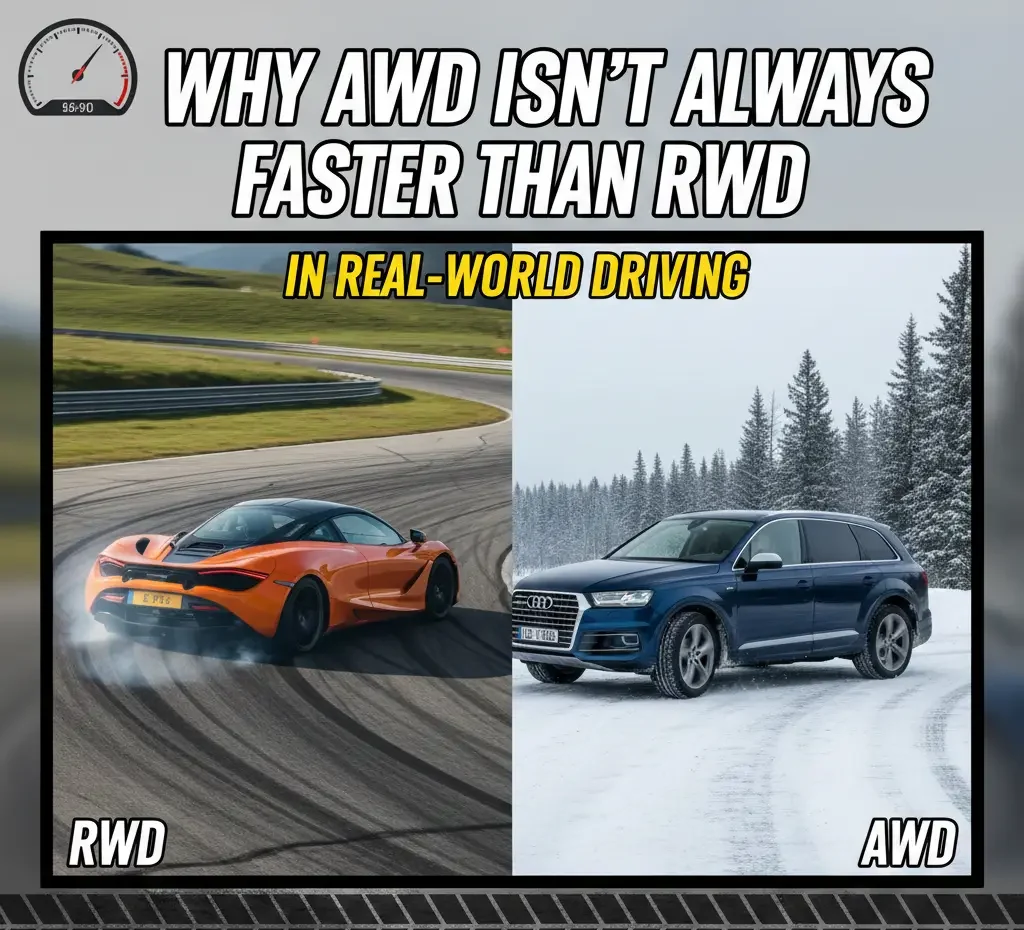
Why AWD Isn’t Always Faster Than RWD in Real-World Driving All-Wheel Drive (AWD) has a reputation for being the ultimate performance drivetrain. The logic sounds simple: more driven wheels = more grip = faster acceleration. That logic is incomplete. In controlled environments—drag strips, snow, or rain—AWD often dominates. But in real-world driving, AWD is not always faster than Rear-Wheel Drive (RWD). In many everyday situations, RWD can match or even outperform AWD. To understand why, we need to stop thinking in marketing terms and start thinking in physics. 1. Acceleration Is Limited by Grip and Weight Transfer When a car accelerates, weight shifts rearward. This is basic physics: inertia resists forward motion, loading the rear tires and unloading the front ones. RWD benefits directly from thisAs weight transfers rearward, the driven wheels gain more vertical load, increasing available friction. AWD partially wastes gripAWD sends power to the front wheels, but during acceleration the front axle is losing load. That means part of the drivetrain is working with less usable grip. In straight-line acceleration on dry pavement, RWD naturally aligns with weight transfer. AWD fights against it. 2. AWD Systems Add Mass — and Mass Hurts Acceleration AWD is heavier. Always. Extra components include: Front differential Transfer case Additional driveshafts More complex axles That added mass does two things: Reduces acceleration (Newton’s second law: F = m·a) Increases rotational inertia, which further slows response In real-world speeds (30–120 km/h), where grip is usually sufficient, lighter RWD cars accelerate more efficiently than heavier AWD equivalents with similar power. This is why many RWD sports cars feel quicker on the road, even when AWD cars win spec-sheet comparisons. 3. Drivetrain Losses Are Higher in AWD Every mechanical component absorbs energy. AWD systems typically lose: 20–25% of engine output through the drivetrainRWD systems often lose: 15–18% That difference matters. Even if two cars make the same engine power, the RWD car often delivers more usable power to the wheels. On dry roads, this can translate directly into faster acceleration once traction is no longer the limiting factor. 4. AWD Helps Launches — Not Rolling Acceleration AWD shines at one thing: launching from a stop. That’s why: Drag races 0–100 km/h times Marketing videos …favor AWD. But real-world driving rarely involves full-throttle launches from zero. From rolling speeds: Traction is already sufficient Weight transfer favors the rear axle Power becomes the limiting factor, not grip In these conditions, RWD often accelerates just as fast—or faster—than AWD. 5. Torque Management Limits AWD Performance Modern AWD cars rely heavily on electronic torque management systems to protect driveline components and maintain stability. That means: Power is often intentionally limited in lower gears Front axle torque is reduced under certain conditions The system prioritizes safety over maximum acceleration RWD cars are mechanically simpler and often allow more direct throttle-to-wheel response, especially in performance-focused setups. 6. When AWD Is Faster (And When It’s Not) AWD is faster when: Road surface is wet, snowy, or loose Launching from a standstill Power levels exceed available rear-tire grip RWD is faster when: Road is dry Acceleration starts from rolling speeds Vehicle mass and drivetrain losses matter Driver skill and throttle modulation are involved This is why high-performance manufacturers still build RWD cars even when AWD technology is widely available. 7. Real-World Example Many RWD sports cars with: Lower weight Better power-to-weight ratio Shorter gearing Can feel faster and more responsive than heavier AWD cars with similar or even higher power figures. The stopwatch may favor AWD in perfect launches. The road often favors RWD. Final Verdict: AWD Is Not Automatically Faster AWD is a tool, not a guarantee. It improves traction when grip is limited, but it comes with penalties: Extra weight Higher drivetrain losses Less favorable weight transfer during acceleration In real-world driving—dry roads, rolling speeds, daily use—RWD often delivers better acceleration efficiency and a more direct driving experience. Believing AWD is always faster means falling for marketing, not physics. More informations from external sources Weight Transfer & Vehicle Dynamics Race Car Vehicle Dynamics – Milliken & Milliken (concept reference used everywhere) https://www.millikenresearch.com/race-car-vehicle-dynamics/ Weight Transfer Explained (University-level physics) https://www.engineeringexplained.com/physics-weight-transfer/ Drivetrain Losses (AWD vs RWD Efficiency) Drivetrain Losses Explained – Engineering Explained https://www.engineeringexplained.com/drivetrain-losses/ How AWD Systems Work & Their Efficiency https://www.howacarworks.com/drivetrain/all-wheel-drive-system AWD vs RWD Real-World Performance AWD vs RWD – Physics & Real Driving Conditions https://www.carthrottle.com/post/awd-vs-rwd-which-is-faster/ Why AWD Isn’t Always Faster (Technical Perspective) https://www.thedrive.com/tech/why-awd-isnt-always-faster Torque Management & Electronic Limits Torque Management Systems Explained https://www.autozine.org/technical_school/traction/Traction.html Why Cars Limit Torque in Lower Gears https://www.engineeringexplained.com/why-cars-limit-torque/
Why Car Design Is Becoming More Important Than Horsepower ?
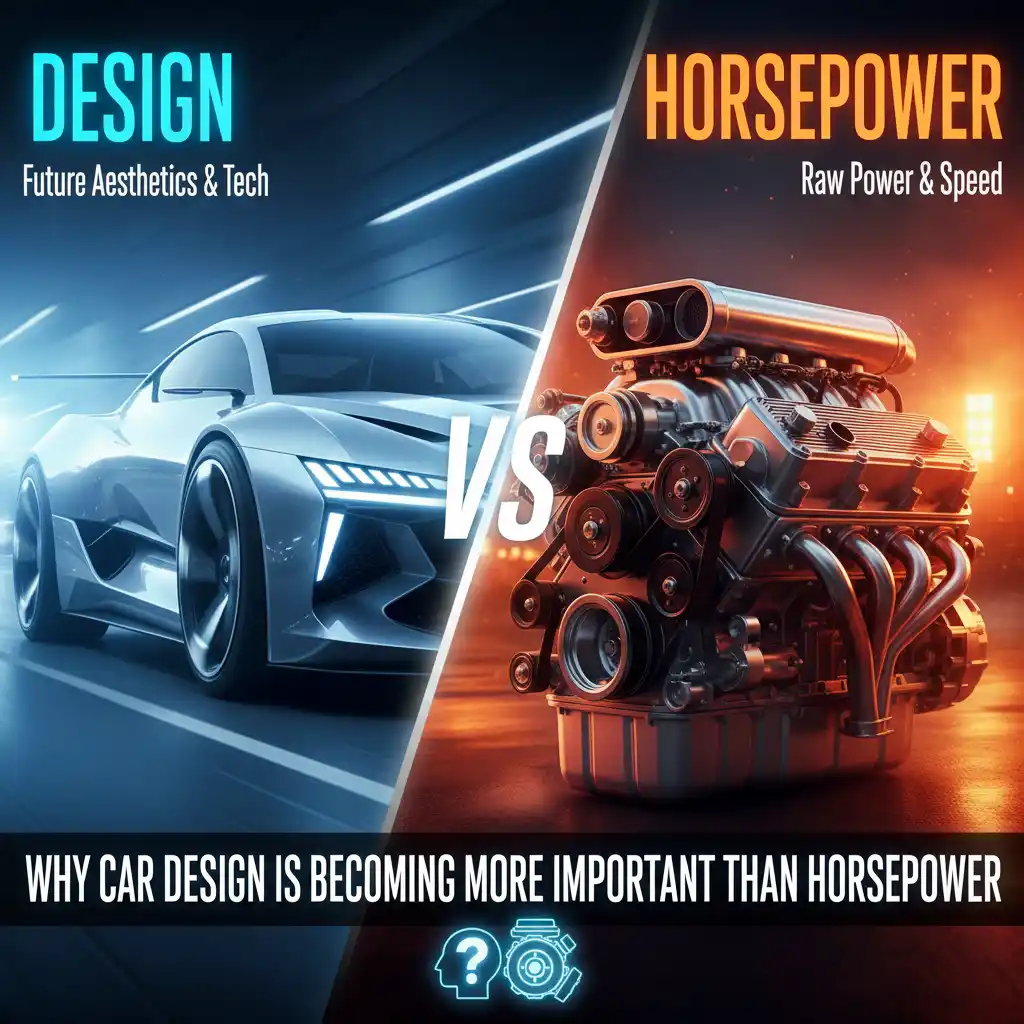
Why Car Design Is Becoming More Important Than Horsepower For decades, car buyers compared vehicles using numbers: horsepower, top speed, 0–100 km/h times. Today, that mindset is changing. In 2025, car design has become just as important—if not more important—than raw performance. From exterior styling to interior atmosphere, design now plays a central role in how cars are perceived, marketed, and sold. The Shift in Buyer Priorities Modern drivers are no longer chasing speed alone. Instead, they value: Visual identity Comfort and ambience Technology integration Brand personality With speed limits, traffic congestion, and electric vehicles becoming common, extreme performance is rarely usable in daily life. Design, however, is experienced every time the car is seen or entered. Exterior Design: The First Emotional Connection A car’s exterior is its handshake with the world. Manufacturers invest heavily in: Signature LED lighting Aggressive or minimalist front grilles Aerodynamic shapes Distinctive color palettes Cars like the Tesla Model 3, Hyundai Ioniq 5, and modern BMW models prove that strong design can define an entire brand generation. In many cases, buyers choose a car within seconds—based purely on how it looks. Interior Design: Where Drivers Actually Live While exterior design attracts attention, interior design seals the deal. Key trends in 2025 include: Large curved displays Minimalist dashboards Ambient lighting Premium materials, even in mid-range cars Drivers now expect their car interior to feel like a modern living space, not just a driving tool. Electric Vehicles Changed the Rules Electric platforms allow designers more freedom: No large engines Flat floors Shorter overhangs More cabin space This is why many electric cars look futuristic. Design is no longer constrained by traditional mechanical layouts. As a result, design has become a competitive weapon, not just decoration. Performance Still Matters—but Differently Performance has not disappeared; it has evolved. Instead of maximum horsepower, buyers now focus on: Smooth acceleration Quiet driving Stability and comfort Instant response in electric cars In everyday driving, these qualities matter more than lap times. Social Media and Design Influence Platforms like Instagram, TikTok, and YouTube have amplified the power of design. A visually striking car: Gets shared more Builds brand awareness Attracts younger buyers A car that looks good online often sells better in reality. Final Thoughts Horsepower numbers impress on paper, but design creates desire. In today’s automotive world, a car must look good, feel good, and represent a lifestyle. That is why manufacturers are investing more in designers than ever before. In 2025 and beyond, the cars that succeed will not be the fastest—but the most memorable. You may love to see.. 0–100 km/h Times Are Misleading: Here’s What Actually Matters December 17, 2025 | by khalid byad 0–100 km/h Times Are Misleading: Here’s What Actually Matters Introduction When car lovers compare performance, one number almost always… Read More → Bugatti Chiron Super Sport: Price, Specs, Top Speed, Performance & Full Review December 9, 2025 | by Ouanzig Abdessamade Bugatti Chiron Super Sport – Price, Specifications, Performance, Photos & Videos Bugatti: The Brand of Records At Bugatti, every model… Read More → Traction Matters More Than Power: 10 facts about it December 13, 2025 | by khalid byad Secrets about why Traction Matters More Than HorsePower Why Traction Matters More Than Horsepower in Real Acceleration When people talk… Read More →
0–100 km/h Times Are Misleading: Here’s What Actually Matters
0–100 km/h Times Are Misleading: Here’s What Actually Matters Introduction When car lovers compare performance, one number almost always pops up: 0–100 km/h times. But here’s the hard truth: this single metric doesn’t tell the full story of a car’s performance. It’s catchy for headlines, easy for comparisons, and impressive on paper — but for real driving, it’s often not the best measure of true acceleration, usability, or everyday performance. Wikipédia This article breaks down the physics and engineering behind acceleration, explains why 0–100 km/h numbers can be misleading, and highlights more meaningful performance metrics. What 0–100 km/h Actually Measures The 0–100 km/h figure shows how long a car takes to go from a complete stop to 100km/h (62 mph). It’s a global standard for quick acceleration numbers, similar to 0–60 mph in the U.S. and UK. Wikipédia Manufacturers and reviewers often optimize cars to post great 0–100 times using launch control, tire warm-ups, and ideal conditions. But this doesn’t necessarily reflect real-world driving, where you rarely accelerate from a dead stop in perfect conditions. Why 0–100 Times Are Misleading Traction and Launch Depend More on Grip Than Power A heavy car with huge horsepower may have a worse 0–100 time simply because it can’t transfer power to the road fast enough. Traction — especially at launch — depends on tire grip, drivetrain layout, and surface conditions more than peak power alone. CarBuzz Electric vehicles dominate 0–100 figures not just because they have power, but because electric motors provide instant torque and smooth, uninterrupted power delivery at low speeds. LinkedIn Surface, Weather, and Test Conditions Matter The exact same car can post different acceleration times under different conditions. Cold tires, wet surfaces, altitude, and even tire pressure can change results by tenths of a second. Some tests even include a “rollout” — starting the timer after the car has already moved a short distance — making official numbers look better. https://www.topgear.com.ph Launch Control Skews the Meaning Many modern performance cars use launch control systems that are not representative of everyday driving. A car that launches perfectly on a test track may still feel slower when merging on a highway or doing in-gear acceleration because those systems aren’t engaged. motors.mega.mu What Actually Matters in Performance (The Better Metrics) Power-to-Weight Ratio Instead of just peak horsepower, look at power relative to weight (kW/kg or HP/kg). This tells you how much force the car has available per kilogram of mass. A lighter, moderately powerful car may outperform a heavier, powerful one even if their 0–100 times are close. Wikipédia Why this matters: physics tells us acceleration is fundamentally about how much power the car can apply relative to its mass — more so than the 0–100 number itself. In-Gear Acceleration (e.g., 50– km/h) A more useful real-world metric is in-gear acceleration — for example, how long it takes to go from 50 to km/h. This reflects everyday driving situations like overtaking on highways. Cars optimized strictly for 0– times sometimes sacrifice mid-range performance. CarBuzz Quarter Mile (Standing 400 m) A standing quarter mile time captures acceleration over a longer distance, accounting for traction, gearing, and shifting efficiency. Many performance analysts consider this a better overall acceleration indicator than a short sprint to 100 km/h. autospeed.com Gearing and Drivetrain Efficiency Acceleration is not just motor power — it’s how power reaches the wheels. Gear ratios, transmission type (manual, DSG, CVT), and drivetrain losses (which can be 10–25% from engine to wheels) all influence acceleration. Wikipédia Real-World Driving Beats Paper Numbers In everyday driving, you rarely use perfect 0–100 launches. Instead, performance feels like: How quickly it overtakes another car in traffic How responsive the throttle feels mid-range How stable and communicative the car feels These aspects are driven by real dynamic performance, not just a stopwatch number. https://www.topgear.com.ph Conclusion: 0–100 Times Don’t Tell the Whole Story 0–100 km/h times make for flashy headlines, but smart performance evaluation means also looking at: Power-to-weight ratio Traction and launch capability In-gear acceleration Quarter-mile times Drivetrain and gearing efficiency If you want real performance insight, you need to think beyond the stopwatch and understand the physics and engineering behind what makes a car feel fast in the real world.
Will Manual Transmissions Make a Comeback in Modern Cars?

Will Manual Transmissions Make a Comeback in Modern Cars? Manual transmissions have become increasingly rare on today’s roads, with the vast majority of drivers opting for automatic vehicles for daily use. Convenience, comfort, and advances in automatic transmission technology have largely driven this shift. However, despite this dominance, a renewed interest in manual gearboxes is emerging among a dedicated group of driving enthusiasts. Manual transmissions are becoming increasingly rare in the United States, with recent data showing that approximately 97 percent of drivers now rely on automatic vehicles. This trend makes the idea of a manual transmission comeback seem unlikely. However, for many drivers, the appeal of a manual gearbox lies in the sense of control and engagement it offers. Changing gears manually creates a deeper connection between the driver and the car—an experience that even the most advanced automatic systems struggle to replicate. While manual transmissions have never completely disappeared, their availability has declined significantly over the past decade. According to Hewland Engineering, a company with decades of experience in transmission development, the market for manual gearboxes is showing clear signs of revival. This trend has been highlighted by automotive media outlets such as SlashGear. Andy Morley, Managing Director of Hewland Engineering, stated in an interview with Top Gear that vehicles like the Koenigsegg CC850 demonstrate a genuine demand for manual shifting, even in the high-performance segment. Such models prove that, despite technological progress, there remains a strong emotional and experiential demand for manual driving. This development is particularly encouraging for car enthusiasts. Traditionally, manual transmissions have been associated with ultra-expensive performance cars that are inaccessible to most buyers. However, the presence of manual gearboxes in more attainable models offers enthusiasts the opportunity to enjoy a more engaging driving experience without entering the hypercar market. Morley also noted a noticeable increase in demand for H-gate manual transmissions, despite recent expectations that electric vehicles and advanced automatics would lead to the near extinction of manual gearboxes. Nevertheless, the number of manual-transmission vehicles available in the U.S. market remains limited. In 2025 alone, production of five manual-equipped models was discontinued. Despite this reduction, several notable options remain. The Porsche GT3 continues to cater to performance purists, while the Ford Mustang GT Fastback offers a six-speed manual transmission with rev-matching technology, starting at $46,560. For buyers seeking a more affordable and practical option, the Honda Civic Si stands out. It delivers a four-door sedan with seating for five, a six-speed manual transmission, a 200-horsepower engine, and a limited-slip differential, with a starting price of $30,995 before additional fees. Automotive experts emphasize that the survival of manual transmissions ultimately depends on consumer behavior. Continued interest alone is not enough—drivers who value three-pedal driving must actively choose and purchase these vehicles to keep them viable in the market. As the automotive industry continues its transition toward electric and automatic vehicles, manual transmissions are unlikely to return as a mainstream standard. However, they are far from extinct. Instead, they are evolving into a niche offering that symbolizes driving passion, mechanical involvement, and complete control—qualities that remain deeply valued by true enthusiasts. Do you think manual transmissions still have a future in modern cars? Share your opinion and tell us whether you would choose a manual over an automatic today. sports cars with manual transmission : Ford Mustang Dark Horse You may love to see.. The Car That Defined the ’90s: The Unbreakable Legend of the Toyota Supra MK IV December 15, 2025 | by Ouanzig Abdessamade The Car That Defined the ’90s: The Unbreakable Legend of the Toyota Supra MK IV Before the Toyota Supra MK… Read More → Why Did China Restrict One-Pedal Driving in Electric Vehicles? December 25, 2025 | by Ouanzig Abdessamade Why Did China Restrict One-Pedal Driving in Electric Vehicles? As the global electric vehicle (EV) market continues to expand at… Read More → Electric Cars vs Gas Cars: Which Is Better in 2025? December 7, 2025 | by Ouanzig Abdessamade Electric Cars vs Gas Cars: Which Is Better in 2025? The automotive world continues its biggest transformation ever, and… Read More →
Thin vs Thick Wheels: Why Wheel Width Matters More Than You Think
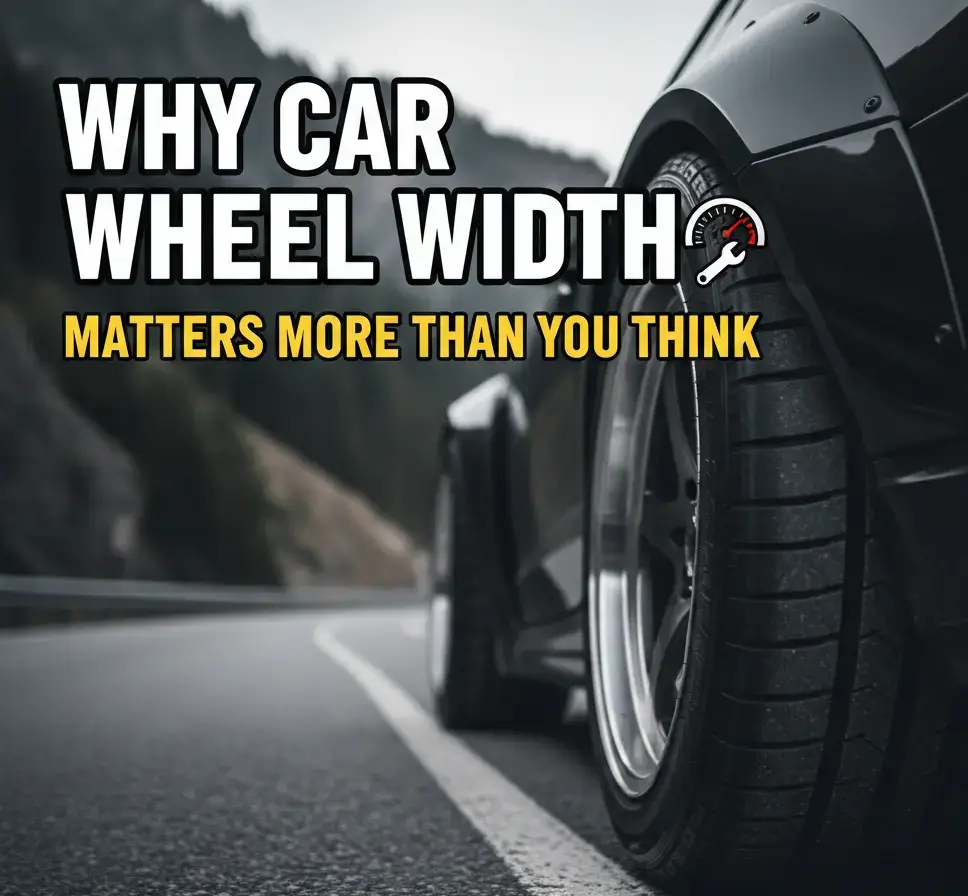
Thin vs Thick Wheels: Why Wheel Width Matters More Than You Think Introduction If you’ve ever looked at cars side by side, you probably noticed something interesting:some cars ride on thin wheels, while others use wide, aggressive wheels. This is not random, not just a style choice, and definitely not marketing nonsense. Wheel width directly affects handling, comfort, fuel consumption, grip, braking, and even safety. Choosing the wrong type can make your car uncomfortable, inefficient, or unstable. Let’s break it down scientifically and practically. What Do We Mean by Thin and Thick Wheels? Thin wheels: Narrow tire width (e.g., 175–195 mm) Thick (wide) wheels: Wider tire width (e.g., 225–315 mm) Wheel width always works together with: Tire profile (sidewall height) Vehicle weight Suspension setup Intended driving use Why Some Cars Use Thin Wheels 1. Better Fuel Efficiency (Science-Based) Thin wheels create less rolling resistance.Less rubber touching the road = less energy needed to move the car. This is why: Economy cars Hybrids Electric vehicles almost always use thinner tires. Result: Lower fuel consumption and better battery range. 2. More Comfort on Bad Roads Thin wheels usually come with higher tire sidewalls, which absorb: Road imperfections Speed bumps Potholes This makes them perfect for: City driving Long daily commutes Countries with rough road surfaces Result: Softer ride, less vibration, less fatigue. 3. Lower Cost (Purchase + Maintenance) Thin tires: Are cheaper to buy Wear more evenly Are lighter on suspension components That’s why taxis and fleet vehicles always go thin. Truth: If your goal is saving money, thick wheels are usually a waste. Why Some Cars Use Thick (Wide) Wheels 1. More Grip and Better Handling Wide wheels increase the contact patch between tire and road. This gives: Better cornering stability More traction during acceleration Shorter braking distances (especially at high speed) That’s why: Sports cars Performance sedans Track-focused vehicles use thick wheels. Result: The car feels planted and confident. 2. Improved High-Speed Stability At higher speeds, wide wheels: Reduce body roll Improve steering response Increase driver confidence This matters on: Highways Fast corners Aggressive driving But: This advantage disappears in city traffic. 3. Aggressive Aesthetics (Let’s Be Honest) Wide wheels simply look better: More muscular stance Fills the wheel arches Makes the car appear lower and wider This is the main reason most people upgrade wheels. Reality check: Looks don’t improve performance unless the car is built for it. Thin vs Thick Wheels: Direct Comparison Handling Thin wheels: Stable, predictable, less sharp Thick wheels: Sharper turn-in, more grip Comfort Thin wheels: Much more comfortable Thick wheels: Stiffer ride, more road noise Fuel Consumption Thin wheels: Better efficiency Thick wheels: Worse fuel economy Road Conditions Thin wheels: Better on bad roads and rain Thick wheels: Worse on potholes, risk of rim damage Maintenance Thin wheels: Cheaper tires, longer lifespan Thick wheels: Expensive tires, faster wear Are Thick Wheels Always Better? Absolutely Not Here’s the hard truth: If your car: Has a small engine Is used mainly in the city Has soft suspension Was designed for efficiency Then installing wide wheels is mostly a waste of money. You’ll get: Worse fuel economy More discomfort More wear on suspension No real performance gain When Thick Wheels Actually Make Sense Wide wheels are worth it only if: The car has enough power Suspension is tuned for them You drive aggressively or fast Roads are good Examples: BMW M models AMG models Sports coupes Track-oriented builds Otherwise? Stick to stock or slightly wider—not extreme. Final Verdict: Which One Should You Choose? Choose thin wheels if you want: Comfort Efficiency Reliability Lower costs Choose thick wheels if you want: Performance Grip Aggressive looks High-speed stability Science-based conclusion:Most daily drivers are better off with thinner or factory-sized wheels. Oversizing wheels for looks alone rarely improves real-world performance. Here are external links with real, physics-based details on wheel/tire behavior, contact patch, rolling resistance, and the physical principles behind them: 🔗 Michelin – What Rolling Resistance Is & Its Effects on Fuel Consumption — explains how tire deformation, pressure, width, and structure influence rolling resistance (real physics + industry perspective):https://africa.michelin.com/fr/auto/conseil/regles-pneus/resistance-au-roulement Michelin Afrique 📘 ScienceDirect – Rolling Resistance Overview — technical explanation of how tire deformation and contact patch cause energy loss, the core physics of rolling resistance:https://www.sciencedirect.com/topics/engineering/rolling-resistance ScienceDirect 📘 SpringerLink – Tyres and Wheels (physics details) — academic resource on tire contact patch, lateral forces, and how width affects friction distribution and grip:https://link.springer.com/chapter/10.1007/978-3-658-39847-7_1 SpringerLink 📘 The Contact Patch – Hysteresis Losses in Rolling Wheels — deep dive into the energy loss due to tire deformation and contact patch physics:https://www.thecontactpatch.com/general/g1619-hysteresis-losses-in-rolling-wheels The Contact Patch 📘 HandWiki – Physics of Rolling Resistance — physics explanation of rolling resistance, rubber hysteresis, and torque opposing wheel rotation:https://handwiki.org/wiki/Physics:Rolling_resistance HandWiki You may love to see.. The Car That Defined the ’90s: The Unbreakable Legend of the Toyota Supra MK IV December 15, 2025 | by Ouanzig Abdessamade The Car That Defined the ’90s: The Unbreakable Legend of the Toyota Supra MK IV Before the Toyota Supra MK… Read More → Stop Ruining Your Paint! The 5 Biggest Car Wash Mistakes You’re Probably Making December 7, 2025 | by kh.byad@gmail.com Stop Ruining Your Paint! The 5 Biggest Car Wash Mistakes You’re Probably Making Why Washing Your Car Matters (Beyond Looks)… Read More → Turbo vs SuperCharger : Which One Truly Delivers More Power? December 3, 2025 | by kh.byad@gmail.com Turbocharger vs Supercharger: Which One Truly Delivers More Power? TurboCharger Runs on exhaust gases. The hot air leaving the engine… Read More →
The Car That Defined the ’90s: The Unbreakable Legend of the Toyota Supra MK IV

The Car That Defined the ’90s: The Unbreakable Legend of the Toyota Supra MK IV Before the Toyota Supra MK IV (A80), performance cars were often defined by Italian pedigree and German engineering. After it, the rulebook was entirely rewritten by Japan. This wasn’t just a sports car; it was a blueprint for the modern tuning world and a cultural icon whose legend only grows stronger. Ask any car enthusiast to name a definitive vehicle of the 1990s, and the Supra MK IV is almost always at the top of the list. It’s the car that brought supercar performance down to the streets, establishing itself as an icon of speed, durability, and raw potential. 🇯🇵 Design & Debut: A Radical Departure When the fourth-generation Supra launched, it was a seismic shift from its heavier, boxier predecessors. Toyota engineered the MK IV to be a genuine contender to European performance giants, focusing intensely on shedding weight and improving aerodynamics. The result was a sleek, sculpted body that looked fast even sitting still. Weight Loss Mission: Toyota went to extreme lengths to lighten the Supra. They used aluminum for the hood, front cross members, upper suspension A-arms, and even the oil pan. This dedication resulted in a car that was hundreds of pounds lighter than the previous generation. Aero Focus: The design, especially with the famous optional “basket handle” wing, was focused on high-speed stability. It was sleek, uncluttered, and perfectly embodied the smoother, more organic design language emerging in the mid-90s. But the Supra’s real story wasn’t in its sheet metal; it was underneath the hood. The Engine: The Mythology of the 2JZ-GTE The true star of the MK IV is the engine that powered it: the 3.0-liter Inline-Six Twin-Turbo, code-named 2JZ-GTE. While factory ratings put it at $320$ hp in the US and a modest $276$ hp in Japan (due to an industry “gentlemen’s agreement”), its real potential was an open secret. Why the 2JZ Became Legendary: The Unbreakable Iron Block: Unlike many performance engines that use aluminum, the 2JZ-GTE utilized a cast-iron engine block. This extremely tough construction made the engine notoriously strong and capable of withstanding massive amounts of internal pressure. Sequential Turbocharging: It used a sophisticated system where a smaller turbo spooled up immediately to eliminate low-end lag, followed by a larger turbo kicking in for huge top-end power. This ensured a smooth, linear power delivery unmatched by many contemporary single-turbo setups. A Tuner’s Dream: The stock engine could reliably handle near double its factory horsepower—often pushing $700$ to $800$ hp—with only minor bolt-on upgrades. With internal modifications, four-digit horsepower figures became commonplace. The 2JZ-GTE wasn’t just built to be fast; it was built to withstand the apocalypse. It was a blank cheque for tuners, and they wrote some serious numbers on it. Cultural Impact: From Drag Strips to Hollywood The Supra MK IV wasn’t just a great piece of engineering; it was a cultural phenomenon that reshaped the automotive landscape for the new millennium. Hollywood & Gaming Icon The Supra cemented its legacy through media: The Big Screen: Its star turn in The Fast and the Furious (2001) catapulted it into mainstream consciousness. The orange Supra driven by Paul Walker became one of the most recognizable movie cars of all time, immortalizing the car’s aggressive aesthetics and astronomical tuning potential. Video Game Dominance: The car was a staple in 90s and 2000s racing games like the Gran Turismo series, where players quickly learned that the 2JZ’s tuning capacity meant it could dominate almost any race. Legacy and Value The Supra’s brief production run (ending in 1998 in the US and 2002 in Japan) only enhanced its mystique. Today, clean, low-mileage examples command astronomical prices, cementing its status not just as a used car, but as a historical artifact of an incredible era of analog performance. Conclusion: The End of an Era (and the Legacy) The Supra MK IV represented the peak of Japanese automotive ambition before the industry shifted its focus to practicality and, eventually, electrification. Rising costs, unfavorable exchange rates, and a market increasingly embracing SUVs led to its quiet discontinuation. Yet, its legacy is undeniable. The Supra MK IV proved that Japanese manufacturers could build a truly world-class supercar that was also durable, modifiable, and attainable. It didn’t just compete with the best; it created a new category of performance legend. You may love to see.. 0–100 km/h Times Are Misleading: Here’s What Actually Matters 0–100 km/h Times Are Misleading: Here’s What Actually Matters Introduction When car lovers compare performance, one number almost always… Read More → BYD vs. Tesla: How China’s EV Giant Overtook Tesla and Redefined the Electric Car Market in 2025 China’s BYD has overtaken Tesla for the fourth straight quarter, becoming the world’s top electric vehicle seller in 2025. Despite… Read More → Renault Filante Record Breaks the 1,000-Kilometer Barrier in a Landmark Electric Vehicle Test Renault Filante Record Breaks the 1,000-Kilometer Barrier in a Landmark Electric Vehicle Test A Historic Achievement for Renault in the… Read More →
How Gear Ratios Control Acceleration (More Than Horsepower Ever Will)
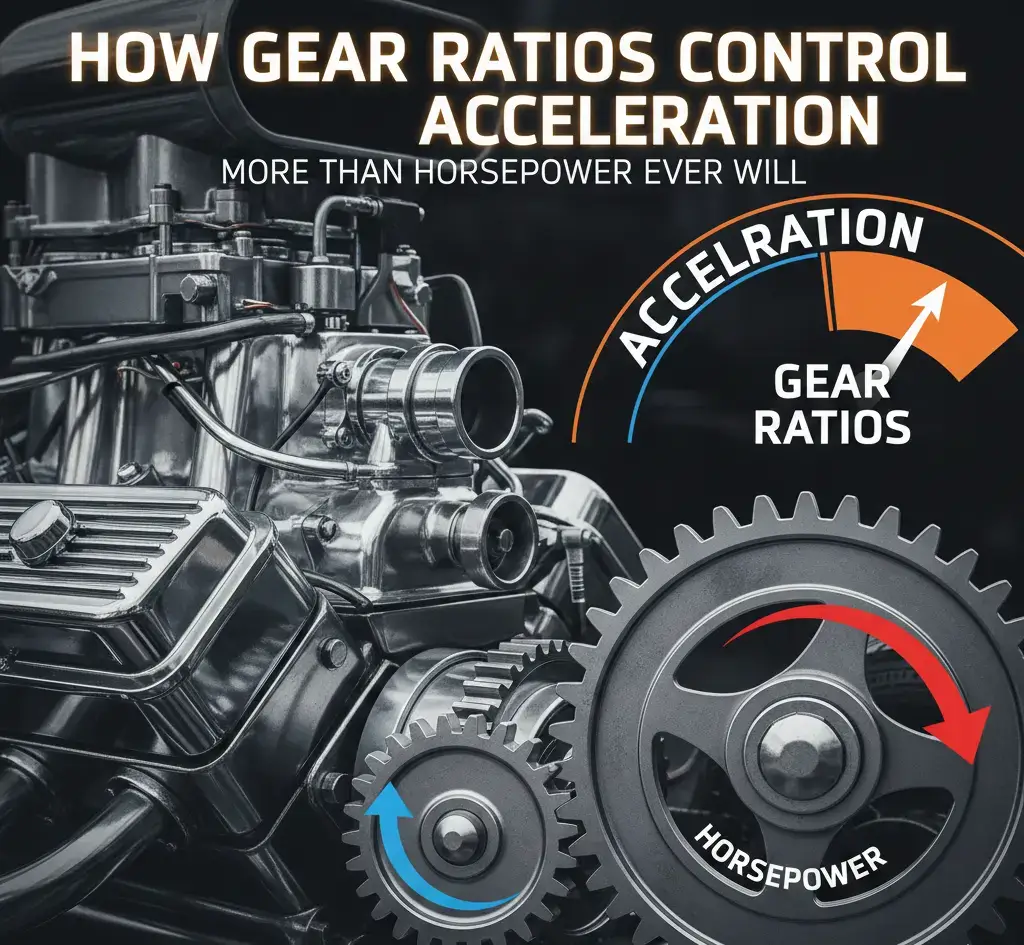
How Gear Ratios Control Acceleration (More Than Horsepower Ever Will) Most people believe acceleration is all about horsepower. In reality, gear ratios play a much bigger role in how fast a car accelerates, especially in real-world driving. Two cars with the same engine power can feel completely different simply because of how their gears are set up. This article explains, clearly and scientifically, how gear ratios control acceleration and why they matter more than most drivers realize. 1. What a Gear Ratio Actually Does A gear ratio determines how many times the engine rotates for one rotation of the wheels. Short gear ratio → engine spins more → more torque at the wheels Long gear ratio → engine spins less → less torque at the wheels The engine itself produces torque, but the gearbox multiplies that torque before it reaches the tires. This means: Wheel torque = engine torque × gear ratio Acceleration depends on wheel torque, not engine torque alone. 2. Why Short Gears Feel Faster Cars with short gearing feel aggressive and punchy because: the engine stays in its power band torque multiplication is high throttle response feels instant low-speed acceleration is strong This is why: small turbo engines feel fast in the city hot hatches feel explosive off the line some low-horsepower cars feel quicker than powerful ones Short gears trade top speed for acceleration — and that trade often feels amazing in daily driving. 3. Long Gears Feel Slower (But Have a Purpose) Long gear ratios reduce engine RPM at speed. They are designed for: fuel efficiency highway comfort lower noise lower emissions But the downside is clear: weaker low-speed acceleration slower response less urgency That’s why many modern cars feel “lazy” despite decent horsepower. The engine has power, but the gearbox doesn’t let you use it immediately. 4. Gear Ratios vs Horsepower: A Simple Example Car A: 200 hp short gearing Car B: 300 hp long gearing From 0–60 km/h or 0–100 km/h: Car A can accelerate faster From high speed: Car B pulls harder This proves an important rule: Acceleration is about torque at the wheels, not power on paper. 5. Why Sports Cars Use Close Gear Ratios Performance cars use close-ratio gearboxes, meaning gears are spaced tightly together. Benefits: engine stays near peak power minimal RPM drop during shifts constant acceleration better control This is why sports cars: feel smooth under hard acceleration respond instantly dominate on track It’s not magic — it’s smart gearing. 6. Automatic vs Manual: Gear Ratio Behavior Manual Transmissions fixed gear ratios driver controls RPM more mechanical connection Manual cars often feel faster because drivers keep the engine in the power band. Automatic & Dual-Clutch (DCT) optimized shift timing faster shifts aggressive low gears Modern automatics often outperform manuals because they use: extremely short first gears multiple gear steps perfect shift logic CVT Transmissions CVTs don’t have traditional gears. They keep the engine at peak power RPM. Result: smooth acceleration no “kick” less emotional feel CVTs can be efficient, but many drivers dislike the disconnected sensation. 7. Why Gear Ratios Affect Traction Short gears deliver huge torque instantly. If traction is limited: wheelspin increases traction control intervenes acceleration slows This is why: powerful cars struggle in first gear AWD systems help short gearing traction limits acceleration, not power Gear ratios and traction are deeply connected. 8. Why Manufacturers Choose “Boring” Gears Car makers intentionally use longer gearing to: pass emissions tests reduce fuel consumption meet noise regulations increase engine lifespan They sacrifice excitement for compliance. That’s why many tuned cars feel faster without adding power — tuning often removes torque limits and alters gear behavior. 9. Real-Life Driving: Where Gear Ratios Matter Most Gear ratios control: city responsiveness overtaking speed highway merging driving enjoyment This is why rolling acceleration (60–120 km/h) depends heavily on: gear selection downshift logic ratio spacing A car with smart gearing will always feel faster than one with lazy ratios. Final Verdict Horsepower defines potential.Gear ratios decide how much of that potential you actually feel. Short gears = faster acceleration, stronger response, more excitement.Long gears = efficiency, comfort, and calmer driving. If you want a car that feels fast in real life, don’t just look at horsepower numbers. Look at: gear ratios transmission type torque curve how the power is delivered Because acceleration starts in the gearbox, not the engine. For readers who want a deeper technical explanation of how gear ratios multiply torque and affect wheel speed, this resource breaks down the mechanics and math behind gear ratios in a simple but accurate way: https://en.wikipedia.org/wiki/Gear_ratio more sources : New World Encyclopedia — Gear ratio• Explains the relationship between gear teeth and rotation speeds, with examples. Gear ratio (New World Encyclopedia) Merriam-Webster Dictionary — Gear ratio definition• Simple engineering definition of the term. Gear ratio (Merriam‑Webster) Dictionary.com — Gear ratio meaning• Another general definition focusing on mechanical context. Gear ratio (Dictionary.com) Collins English Dictionary — Gear ratio• Clear entry with automotive engineering context (engine/transmission). Gear ratio (Collins Dictionary) You may love to see.. From Copycat to King: The Unstoppable Rise of Chinese Automotive Power. December 4, 2025 | by Ouanzig Abdessamade China: From Imitator to Global Leader in the Automotive Industry The global automotive industry has witnessed a seismic shift, with… Read More → How ECU Tuning Really Works — The Science Behind Stage 1, 2, and 3 December 11, 2025 | by kh.byad@gmail.com How ECU Tuning Really Works — The Science Behind Stage 1, 2, and 3 Introduction Modern engines are no longer… Read More → The 2025 Speed Kings: Racing Beyond the Limits of Physics December 4, 2025 | by Ouanzig Abdessamade The Pursuit of Ultimate Velocity: The World’s Fastest Cars of 2025 The race for the title of the “World’s Fastest… Read More → Electric Cars vs Gas Cars: Which Is Better in 2025? December 7, 2025 | by Ouanzig Abdessamade Electric Cars vs Gas Cars: Which Is Better in 2025? The automotive world continues its biggest transformation ever,