The Physics of Rolling Resistance: The Acceleration Killer Nobody Talks About
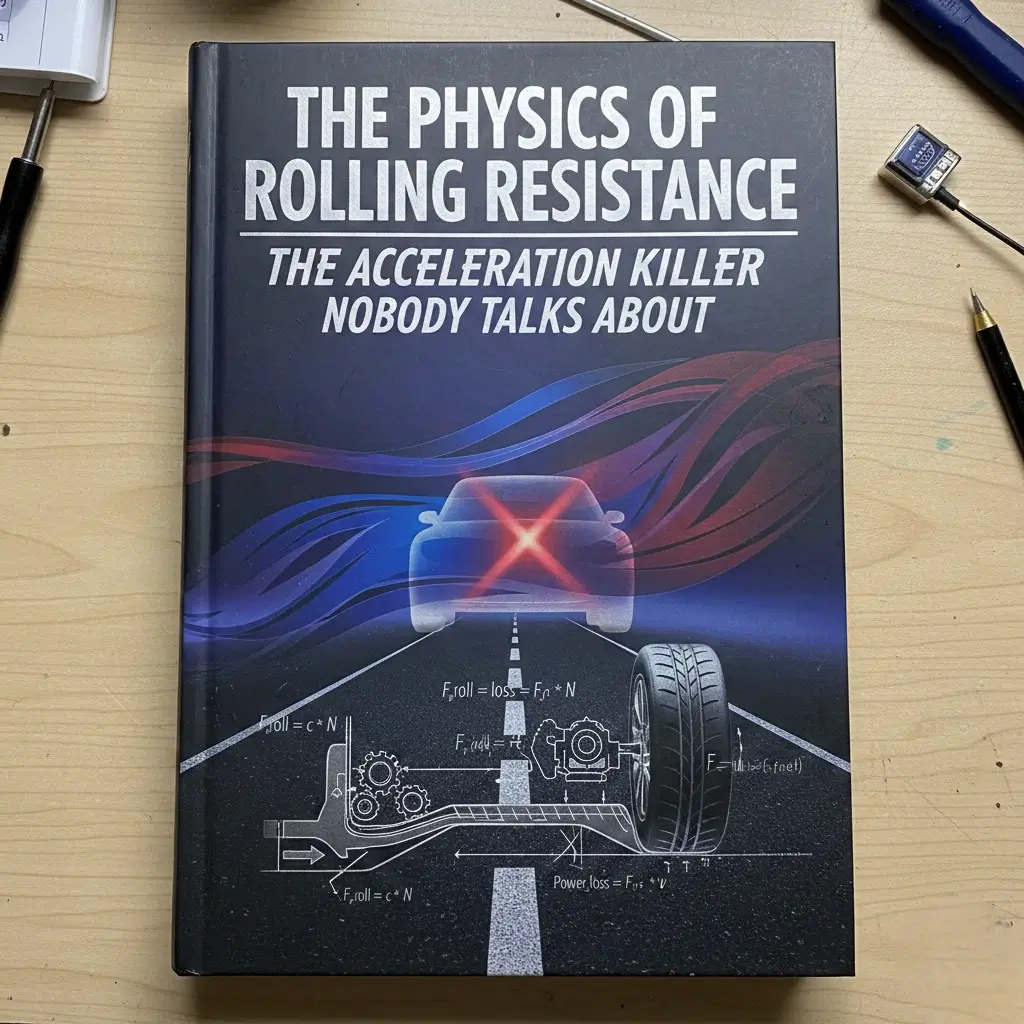
When people talk about acceleration, the discussion usually revolves around horsepower, torque, or drivetrain layout. Very few mention rolling resistance, yet it quietly robs vehicles of performance every single second they move. Unlike aerodynamic drag—which dominates at high speed—rolling resistance is present from 0 km/h, making it a direct enemy of acceleration.
If you’re trying to understand why two cars with similar power feel completely different off the line, rolling resistance is part of the answer.
What Is Rolling Resistance?
Rolling resistance is the force that opposes motion when a tire rolls on a surface. It comes mainly from:
Tire deformation
Energy loss in rubber (hysteresis)
Surface friction at the contact patch
Micro-slippage between tire and road
Every time a tire rotates, it deforms, heats up, and loses energy. That lost energy does not go into forward motion—it turns into heat.
From a physics standpoint, rolling resistance is expressed as:
Frr=Crr×NF_{rr} = C_{rr} \times NFrr=Crr×N
Where:
FrrF_{rr}Frr = rolling resistance force
CrrC_{rr}Crr = rolling resistance coefficient
NNN = normal force (vehicle weight)
This equation already reveals the problem: heavier vehicles suffer more rolling resistance, regardless of power output.
Why Rolling Resistance Hurts Acceleration
Acceleration is governed by Newton’s Second Law:
Fnet=m×aF_{net} = m \times aFnet=m×a
The net force accelerating the car forward is:
Fengine−(Frolling+Faero+drivetrainlosses)F_{engine} – (F_{rolling} + F_{aero} + drivetrain losses)Fengine−(Frolling+Faero+drivetrainlosses)
At low speeds (0–60 km/h), aerodynamic drag is minimal. That means rolling resistance becomes one of the dominant opposing forces.
So if rolling resistance increases:
Less force reaches the wheels
Acceleration decreases
Throttle response feels duller
0–100 km/h times suffer
This is why small changes in tires can dramatically change how fast a car feels, even when horsepower stays the same.
Tire Design: Where Performance Is Won or Lost
Not all tires are equal. Rolling resistance depends heavily on tire construction.
Factors That Increase Rolling Resistance
Softer rubber compounds
Aggressive tread patterns
Wider tires
Lower tire pressure
Heavy tire and wheel assemblies
Performance tires usually have higher rolling resistance because grip-focused compounds deform more under load. That deformation costs energy.
This is why:
Economy cars feel “light” and eager
Performance cars sometimes feel slower than expected at low speed
EV manufacturers obsess over tire efficiency
Why Electric Cars Care So Much About Rolling Resistance
Electric vehicles made rolling resistance mainstream—not for performance, but for range.
Since EV motors deliver instant torque, any unnecessary resistance:
Reduces acceleration efficiency
Kills battery range
Forces higher energy draw
That’s why EV-specific tires exist. They use:
Stiffer sidewalls
Low-hysteresis rubber
Optimized tread blocks
The result? Lower rolling resistance, better efficiency, and improved real-world acceleration—despite identical motor power.
Rolling Resistance vs Aerodynamic Drag
Many people confuse the two. Here’s the reality:
| Speed Range | Dominant Resistance |
|---|---|
| 0–50 km/h | Rolling resistance |
| 50–90 km/h | Mixed |
| 90+ km/h | Aerodynamic drag |
This means launch performance and city acceleration are strongly influenced by rolling resistance, not wind resistance.
If your car feels lazy in traffic but fine on the highway, rolling resistance is likely part of the problem.
Weight, Load, and Real-World Driving
Add passengers, cargo, or larger wheels—and rolling resistance increases immediately.
That’s why:
Heavily loaded cars accelerate slower
SUVs feel sluggish compared to sedans with similar engines
Larger rims often hurt acceleration even if they look “sporty”
This is pure physics. No tuning, no marketing, no excuses.
Can You Reduce Rolling Resistance?
Yes—but every choice has trade-offs.
What Actually Helps
Proper tire pressure (science-backed, not optional)
Lighter wheels
Narrower tires (within safety limits)
Low rolling resistance tire compounds
What Doesn’t
Engine tuning alone
Louder exhausts
Weight reduction without tire optimization
If someone claims acceleration gains while ignoring rolling resistance, they’re selling illusion—not performance.
Final Verdict: Is Rolling Resistance Worth Caring About?
Absolutely. Ignoring rolling resistance means misunderstanding how acceleration works in the real world.
If your goal is:
Faster launches
Better city driving response
Improved efficiency without touching the engine
Then rolling resistance is not optional knowledge—it’s foundational physics.
Anyone chasing acceleration without addressing it is leaving performance on the table.
Scientific & Technical Sources
Engineering Explained – Tire Rolling Explained
https://www.youtube.com/watch?v=YJ_5ZkzPj1gMichelin – Rolling Resistance and Energy Loss
https://www.michelin.com/en/innovation/rolling-resistance/Wikipedia – Rolling Resistance (Physics)
https://en.wikipedia.org/wiki/Rolling_resistanceSAE International – Tire Energy Loss Studies
https://www.sae.org/publications/technical-papers
Table of Contents