Deep In Cars

Renault electric concept car 1000 km electric car EV range test Morocco Renault Filante Record 2025 long-range electric vehicle Renault Scenic E-Tech battery

Renault Filante Record Breaks the 1,000-Kilometer Barrier in a Landmark Electric Vehicle Test

A Historic Achievement for Renault in the Electric Vehicle Range Challenge

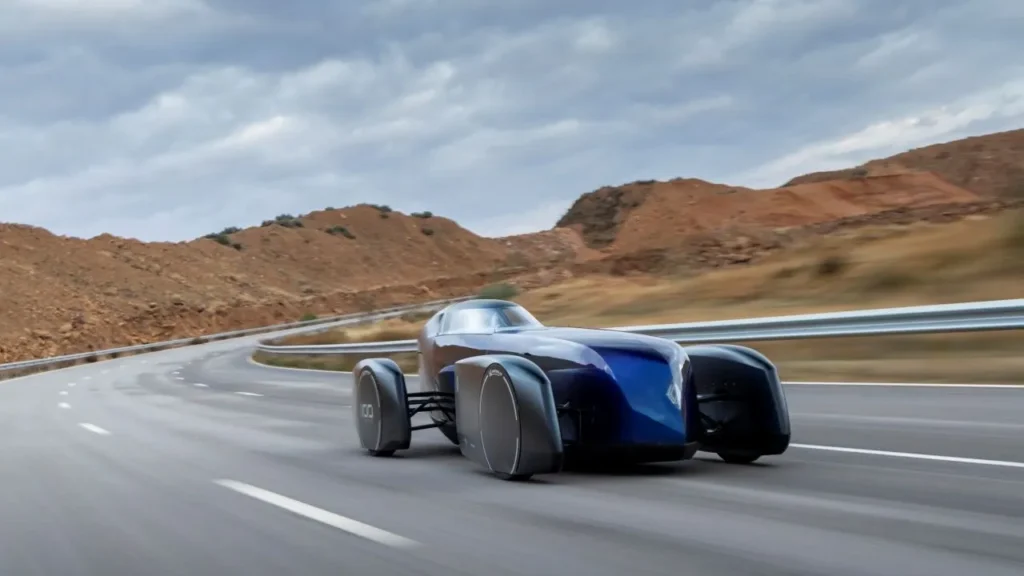
Renault Filante Record has officially rewritten the rules of electric vehicle efficiency. In a landmark achievement for the automotive industry, Renault’s experimental electric concept car successfully covered 1,008 kilometers on a single charge, breaking the symbolic 1,000-kilometer barrier and setting a new benchmark for EV range.

Unveiled roughly a year earlier, the Renault Filante Record 2025 concept was never designed to chase outright speed. Unlike the legendary Renault 40 CV (1925) or the futuristic Étoile Filante (1956)—both known for their speed-oriented records—the Filante Record was engineered with a singular goal: maximizing driving range through extreme efficiency. From the outset, Renault aimed to achieve autonomy figures that initially seemed unrealistic for a battery-electric vehicle.

Record Attempt Conducted in Morocco

After nearly a year of intensive development and validation in wind tunnels, Renault carried out the official record attempt on December 18 at the UTAC test track in Morocco. The test had originally been scheduled for October in France, but adverse weather conditions forced Renault to postpone and relocate the attempt.

Morocco provided stable environmental conditions that allowed Renault engineers to maintain consistent speeds and closely monitor energy consumption, ensuring the validity and credibility of the result.


Renault Sets a New Electric Vehicle Range Record

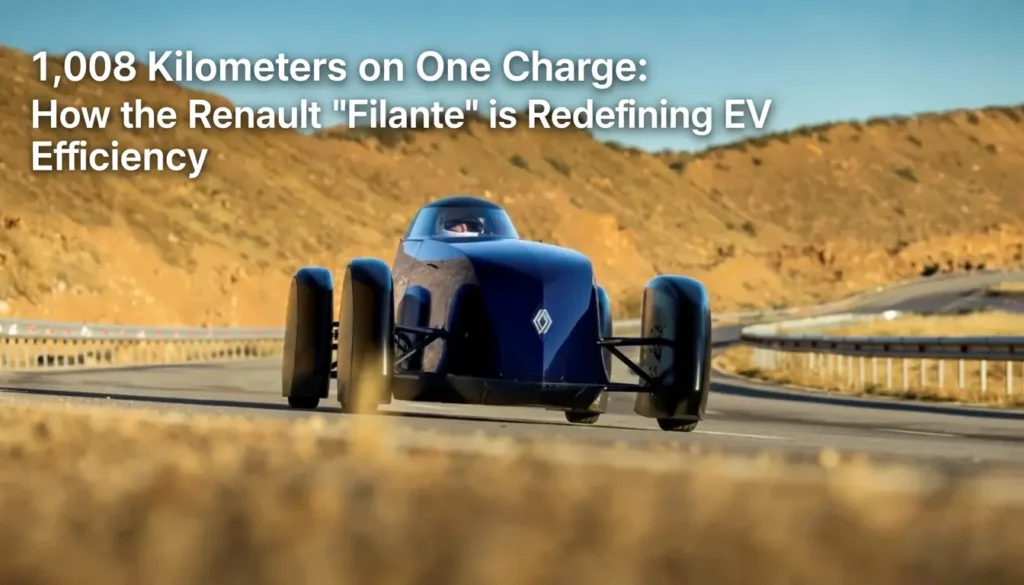
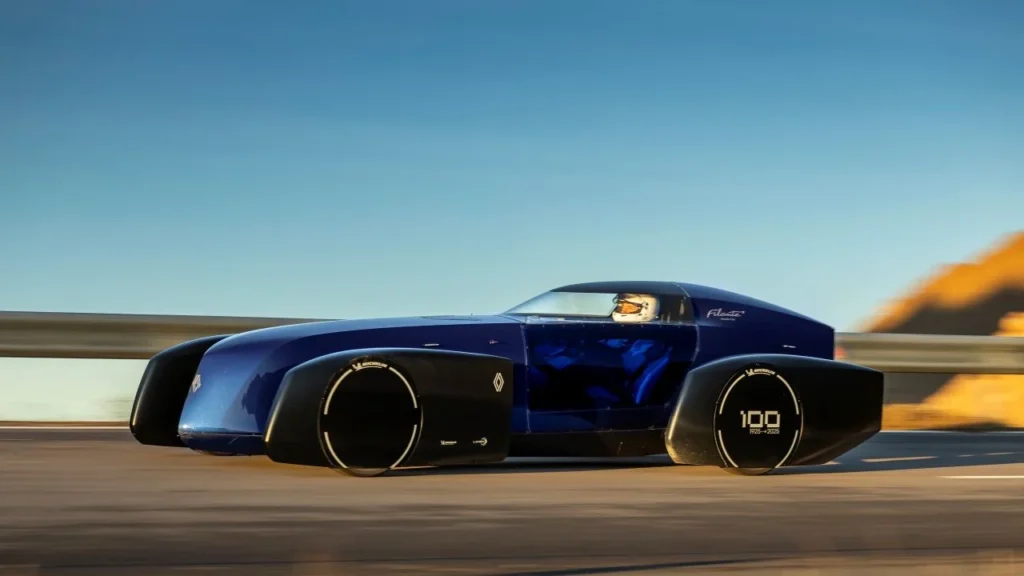
Compared to the first prototype, the final version of the Filante Record features major aerodynamic refinements. Most notably, aerodynamic wheel covers mounted directly onto the wheels significantly improved airflow management. While the original drag coefficient stood at 0.40 Cd, Renault’s engineers targeted a figure closer to 0.30 Cd, a dramatic improvement for an electric vehicle.

This evolution underlines the importance of wheel aerodynamics. Without fairings, airflow impacts the upper section of a rotating tire at a relative speed equivalent to twice the vehicle’s forward velocity, dramatically increasing drag. By addressing this often-overlooked factor, Renault achieved substantial efficiency gains.

The central structure of the vehicle—characterized by a Formula 1-style driving position and a cockpit inspired by fighter jet canopies—remained largely unchanged. However, air intake openings were minimized to further reduce aerodynamic resistance. Renault also partnered with Michelin to develop custom low-rolling-resistance tires, specifically tailored for the Filante Record project.


A Concept Car Weighing Just 1,000 Kilograms

Efficiency was not achieved through aerodynamics alone. The Renault Filante Record integrates steer-by-wire and brake-by-wire systems, eliminating traditional mechanical linkages. These technologies provide greater freedom in chassis design while delivering meaningful weight savings. The steer-by-wire system itself had previously been validated in industry testing, notably by Lexus.

To push weight reduction even further, Renault relied on carbon fiber, aluminum alloys, and Scalmalloy, an advanced high-strength material produced using 3D printing technology.

As a result, the total vehicle weight was limited to just 1,000 kilograms, an exceptional figure for an electric car. Of this, 600 kilograms account for the 87 kWh battery, which is notably the same battery used in the production Renault Scenic E-Tech Electric, currently sold through Renault dealerships.
1,008 Kilometers on a Single Charge at 102 km/h

Renault deliberately chose real-world driving conditions for the record attempt. The goal was to maintain an average speed of around 100 km/h for nearly 10 hours, rather than conducting a slow, laboratory-style efficiency test.

The Filante Record completed 239 laps of a 4-kilometer circuit, driven by three professional drivers: Laurent Hurgon, Constance Leraud-Risser, and Arthur Ferrier. Hurgon began the run at 7:50 a.m., driving for 3 hours and 20 minutes. Leraud-Risser then took over for four hours, with Ferrier completing the final 2 hours and 40 minutes as night conditions set in.

After 9 hours and 52 minutes of continuous driving, excluding just 7 minutes total for driver changes, the Renault Filante Record covered 1,008 kilometers without any recharging, maintaining an average speed of 102 km/h.


7.8 kWh/100 km Consumption and Future Implications

The officially recorded energy consumption was an astonishing 7.8 kWh per 100 kilometers, a figure rarely seen even in the most efficient production EVs. Renault also confirmed that 11% of the battery capacity remained unused, meaning the car could have traveled approximately 120 additional kilometers at speeds above 100 km/h.

These numbers rival, and in some cases exceed, the efficiency levels typically associated with E-REV (Extended-Range Electric Vehicles)—without relying on a combustion engine.


What This Means for the Future of Electric Vehicles

This achievement sends a clear message: electric vehicle range is no longer an insurmountable limitation. By combining lightweight construction, advanced aerodynamics, and intelligent energy management, manufacturers can dramatically extend range without increasing battery size.

Equally important, Renault now possesses a fully functional steer-by-wire system, which is expected to reach future production models—mirroring industry trends hinted at by concepts such as Peugeot Inception. While the Filante Record itself will not enter production, the technologies behind it are likely to shape the next generation of Renault electric vehicles.

Sources

  1. Renault Group – Official Press Releases : https://media.renaultgroup.com/?lang=eng

  2. UTAC – Automotive Testing and Certification Organization : https://www.utac.com/

  3. Michelin – Tire Technology and Low Rolling Resistance Solutions : https://b2b.middle-east.michelin.com/by-technology

You may love to see..