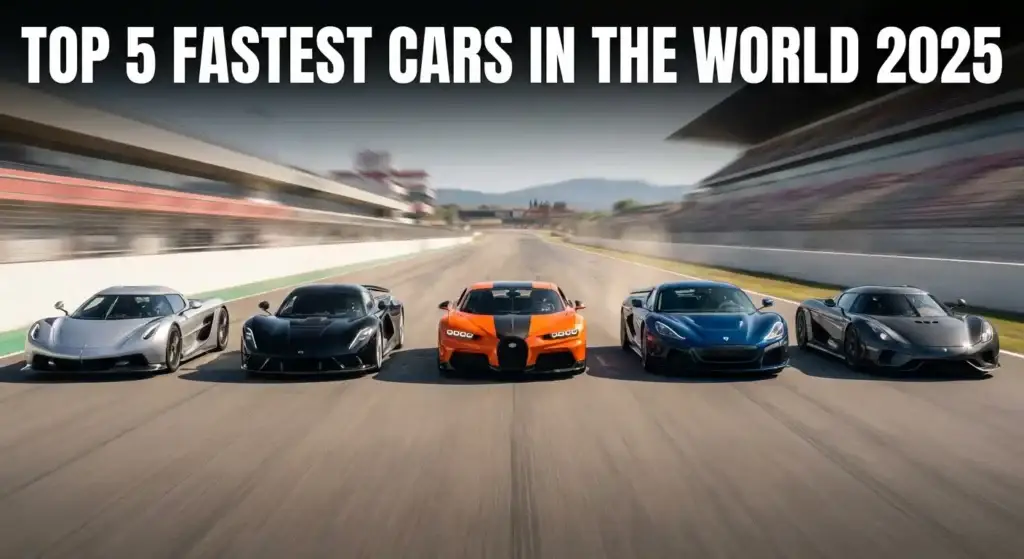

The Pursuit of Ultimate Velocity: The World’s Fastest Cars of 2025
The race for the title of the “World’s Fastest Car” is an unending spectacle, showcasing the pinnacle of automotive engineering. As we navigate 2025, the hypercar landscape is defined by astonishing horsepower, cutting-edge aerodynamics, and a fierce rivalry between traditional combustion engines and the electrifying power of battery technology.
The Contenders for the Crown: Gasoline Titans
Despite the rise of electric performance, a few internal combustion engine (ICE) hypercars remain dedicated to setting new benchmarks for outright top speed.
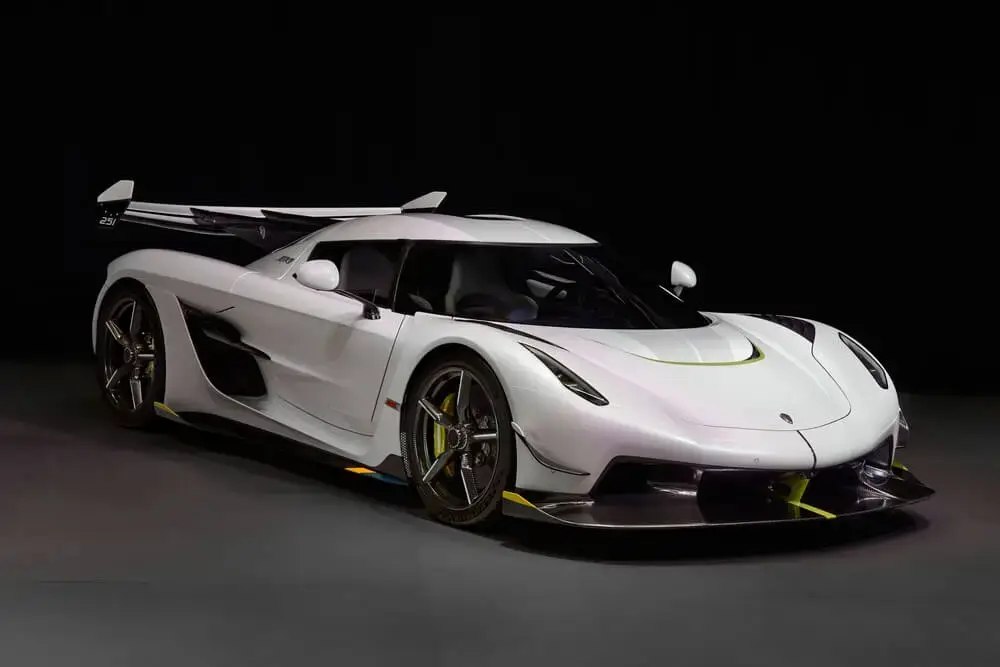
1. Koenigsegg Jesko Absolut
The Swedish megacar is widely considered the primary contender to officially break the 300 mph (483 km/h) barrier and solidify its place as the fastest production car ever. Its design is focused purely on straight-line speed.
Theoretical Top Speed: Over 330 mph (531 km/h).
Power: Up to 1,600 hp (on E85 fuel) from a twin-turbo V8 engine.
Key Feature: An incredibly low drag coefficient (Cd = 0.278) achieved through its long, sleek, aerodynamically optimized body.
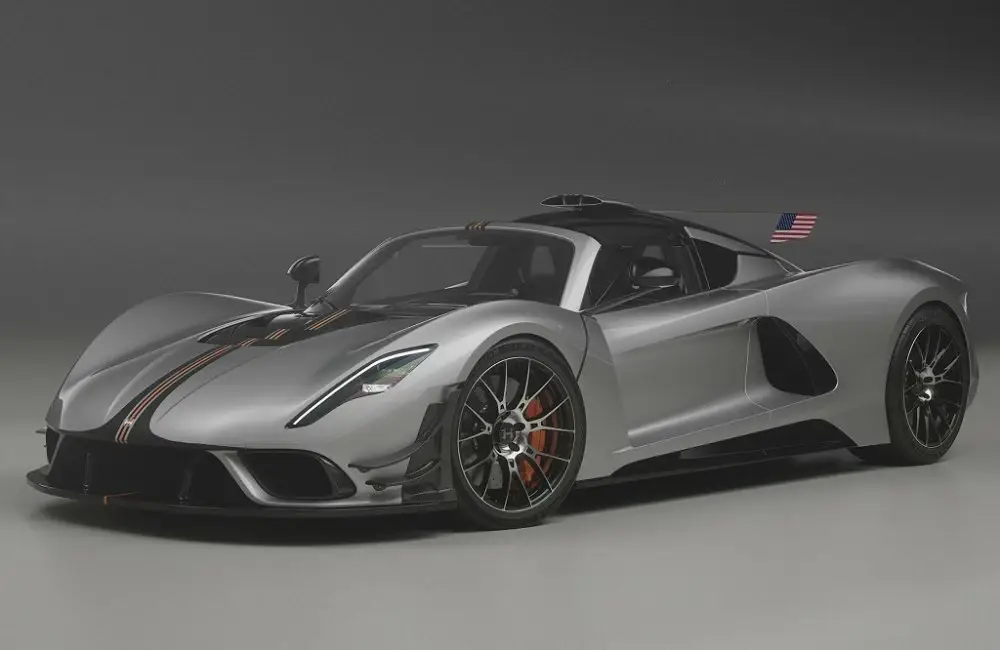
2. Hennessey Venom F5
The American challenger is built with one singular goal: to exceed 311+ mph (500 km/h). Powered by a bespoke 6.6-liter twin-turbo V8 engine called “Fury,” the Venom F5 embodies raw, unadulterated power.
Target Top Speed: 311+ mph (500+ km/h).
Power: An astounding 1,817 hp.
Key Feature: Its ultra-lightweight carbon fiber chassis ensures minimal bulk, maximizing the power-to-weight ratio for extreme velocity.
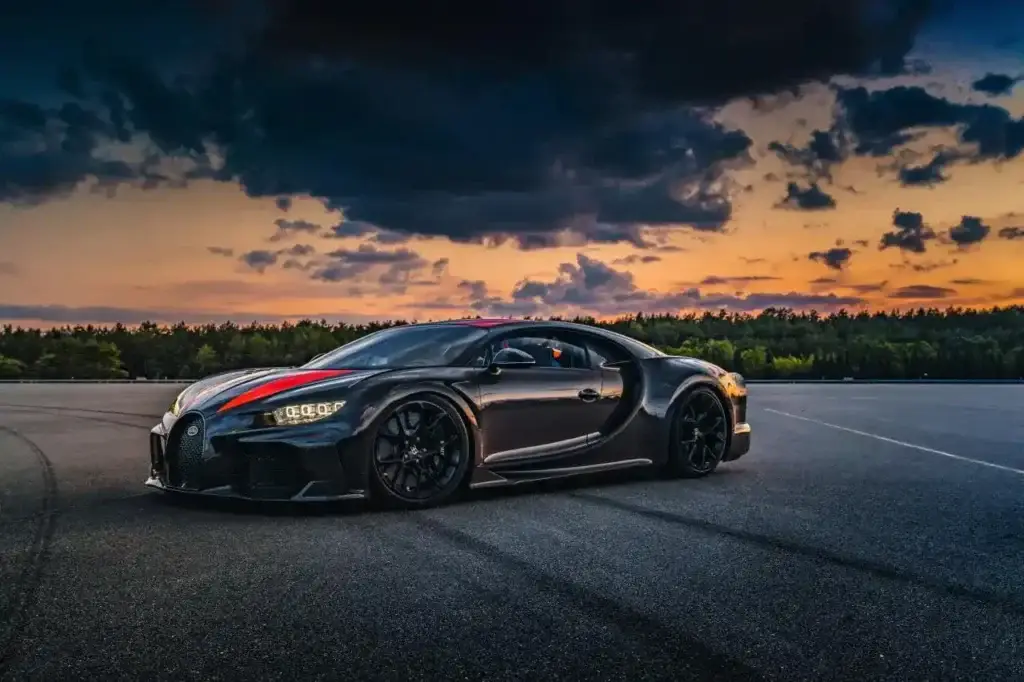
Though Bugatti has moved on to its next chapter, the Chiron Super Sport 300+ is etched in history as the first production car to officially breach the 300 mph mark.
-
Verified Top Speed: 304.77 mph (490.48 km/h).
-
Power: 1,600 PS from the iconic 8.0-liter quad-turbo W16 engine.
-
Key Feature: Its “longtail” body design, which extends by almost 25 cm, optimizes airflow and stability at speeds approaching (500 km/h).
Another challenge was time. By the time the SGP Sla 16 was being developed, the war had turned against Germany. Bombings, material shortages, and lack of manpower slowed all high-tech projects. The army shifted its focus toward simpler, faster solutions rather than experimental engines that needed months or years of testing.
Finally, logistics killed the project. An air-cooled diesel X-16 was extremely ambitious, and while it might have performed well if completed, the war simply didn’t leave enough room to finalize, test, and produce it.
The Electric Revolution: Instant Torque, Extreme Speed
Electric hypercars are fundamentally changing the speed game, using instant, overwhelming torque to achieve mind-boggling acceleration and increasingly competitive top speeds.
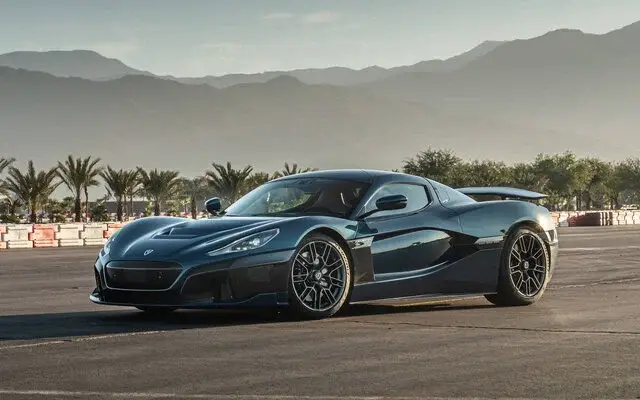
The Croatian electric hypercar has shattered numerous performance records, proving that electric power is a dominant force in the quest for speed.
Top Speed: 258 mph (412 km/h).
Power: 1,914 hp generated by four independent electric motors.
Key Feature: Known for its blistering acceleration, it currently holds the title for the fastest-accelerating production electric car, showcasing the advantage of instant electric torque.
Even though it never turned a tank’s tracks, the SGP Sla 16 remains a fascinating piece of engineering history — a reminder of how innovation can be halted not by design, but by circumstances.
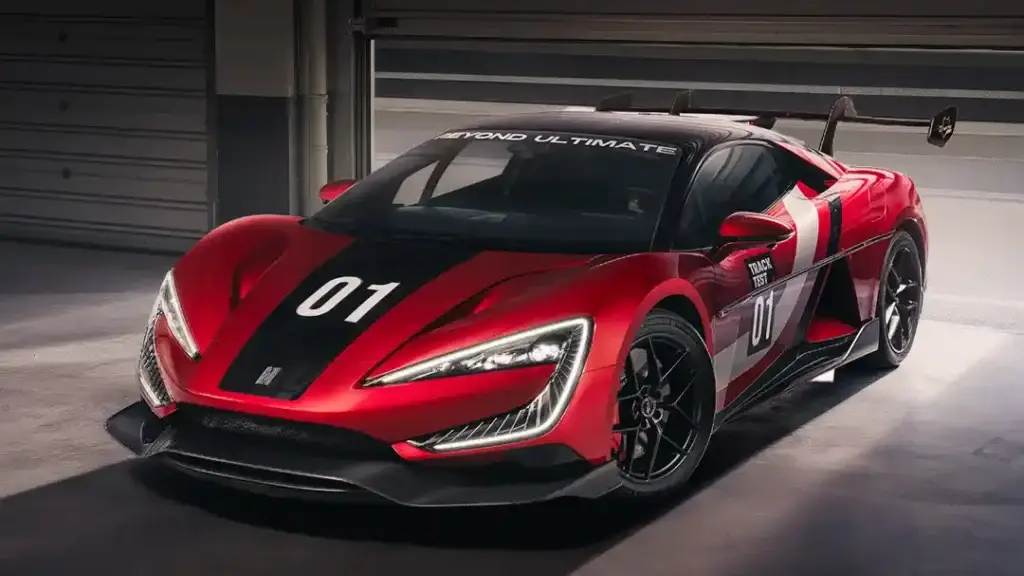
A notable and powerful entry to the electric category, the U9 Xtreme is demonstrating that the electric hypercar segment is rapidly diversifying globally.
Verified Top Speed: 308 mph (496 km/h) (Reportedly set an official record for an EV production car).
Power: Four electric motors collectively deliver a monstrous output, rumored to be near 3,000 hp.
Key Feature: Utilizes an advanced high-voltage electrical system, crucial for managing the immense power output required for record-breaking speed.
The Never-Ending Speed War
The list of the world’s fastest cars in 2025 is more competitive than ever, with new players like the Bugatti Tourbillon and the existing SSC Tuatara (which holds a verified production car record of 295 mph still holding prominent positions.
The battle is no longer solely about engine size; it is a complex struggle involving advanced aerodynamics, material science (like extensive use of carbon fiber), and the fundamental choice between the raw power of fossil fuels and the immediate, staggering thrust of electricity. These machines are more than cars; they are testaments to human innovation, forever chasing the next number on the speedometer.