
🇯🇵 Design & Debut: A Radical Departure
When the fourth-generation Supra launched, it was a seismic shift from its heavier, boxier predecessors. Toyota engineered the MK IV to be a genuine contender to European performance giants, focusing intensely on shedding weight and improving aerodynamics.
The result was a sleek, sculpted body that looked fast even sitting still.
Weight Loss Mission: Toyota went to extreme lengths to lighten the Supra. They used aluminum for the hood, front cross members, upper suspension A-arms, and even the oil pan. This dedication resulted in a car that was hundreds of pounds lighter than the previous generation.
Aero Focus: The design, especially with the famous optional “basket handle” wing, was focused on high-speed stability. It was sleek, uncluttered, and perfectly embodied the smoother, more organic design language emerging in the mid-90s.
But the Supra’s real story wasn’t in its sheet metal; it was underneath the hood.
The Engine: The Mythology of the 2JZ-GTE
The true star of the MK IV is the engine that powered it: the 3.0-liter Inline-Six Twin-Turbo, code-named 2JZ-GTE.
While factory ratings put it at $320$ hp in the US and a modest $276$ hp in Japan (due to an industry “gentlemen’s agreement”), its real potential was an open secret.
Why the 2JZ Became Legendary:
The Unbreakable Iron Block: Unlike many performance engines that use aluminum, the 2JZ-GTE utilized a cast-iron engine block. This extremely tough construction made the engine notoriously strong and capable of withstanding massive amounts of internal pressure.
Sequential Turbocharging: It used a sophisticated system where a smaller turbo spooled up immediately to eliminate low-end lag, followed by a larger turbo kicking in for huge top-end power. This ensured a smooth, linear power delivery unmatched by many contemporary single-turbo setups.
A Tuner’s Dream: The stock engine could reliably handle near double its factory horsepower—often pushing $700$ to $800$ hp—with only minor bolt-on upgrades. With internal modifications, four-digit horsepower figures became commonplace.
The 2JZ-GTE wasn’t just built to be fast; it was built to withstand the apocalypse. It was a blank cheque for tuners, and they wrote some serious numbers on it.
Cultural Impact: From Drag Strips to Hollywood
The Supra MK IV wasn’t just a great piece of engineering; it was a cultural phenomenon that reshaped the automotive landscape for the new millennium.
Hollywood & Gaming Icon
The Supra cemented its legacy through media:
The Big Screen: Its star turn in The Fast and the Furious (2001) catapulted it into mainstream consciousness. The orange Supra driven by Paul Walker became one of the most recognizable movie cars of all time, immortalizing the car’s aggressive aesthetics and astronomical tuning potential.
Video Game Dominance: The car was a staple in 90s and 2000s racing games like the Gran Turismo series, where players quickly learned that the 2JZ’s tuning capacity meant it could dominate almost any race.
Legacy and Value
The Supra’s brief production run (ending in 1998 in the US and 2002 in Japan) only enhanced its mystique. Today, clean, low-mileage examples command astronomical prices, cementing its status not just as a used car, but as a historical artifact of an incredible era of analog performance.
Conclusion: The End of an Era (and the Legacy)
The Supra MK IV represented the peak of Japanese automotive ambition before the industry shifted its focus to practicality and, eventually, electrification. Rising costs, unfavorable exchange rates, and a market increasingly embracing SUVs led to its quiet discontinuation.
Yet, its legacy is undeniable. The Supra MK IV proved that Japanese manufacturers could build a truly world-class supercar that was also durable, modifiable, and attainable. It didn’t just compete with the best; it created a new category of performance legend.

HorsePowers numbers are fake: here is the hidden truth

Why Men Fall in Love With Cars More Than Anything Else
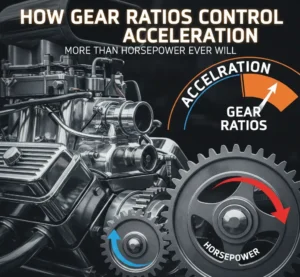
How Gear Ratios Control Acceleration (More Than Horsepower Ever Will)
Table of Contents