Why Traction Matters More Than Horsepower in Real Acceleration
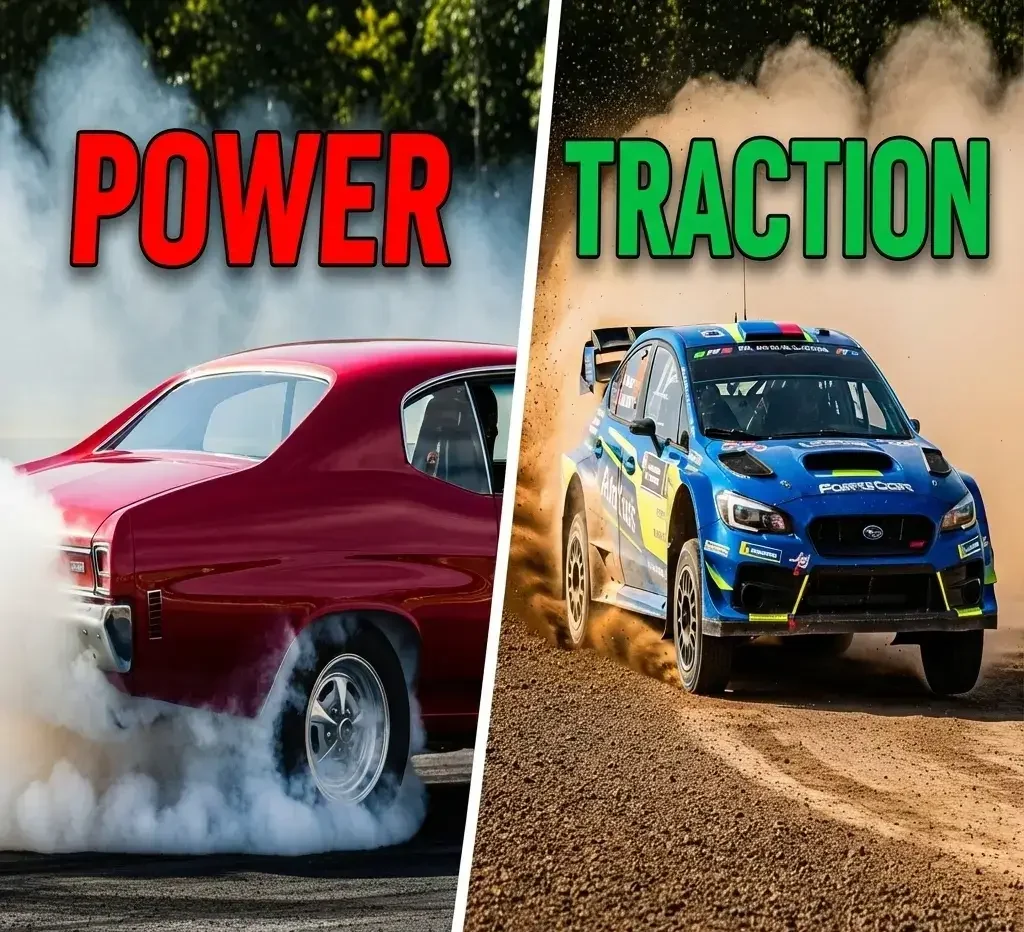
When people talk about fast cars, the conversation almost always starts with horsepower. More horsepower is assumed to mean faster acceleration, better performance, and superior dominance on the road. In reality, this belief is incomplete. Traction—not horsepower—is the true limiting factor during acceleration, especially from a standstill.
Understanding the relationship between traction and horsepower explains why some cars with less power feel quicker than others with much higher output.
The Physics Behind Traction vs Horsepower
Acceleration occurs when force is applied to the road through the tires. The engine produces torque, which is multiplied by the transmission and delivered to the wheels. However, tires can only transmit a limited amount of force before they lose grip.
This limit is defined by:
Once this limit is exceeded, the tires slip. At that point, any additional horsepower becomes wasted energy.
In simple terms:
If the tires cannot hold the force, horsepower becomes irrelevant.
Why Horsepower Fails at Low Speeds
From 0 to 100 km/h, cars experience extreme torque demand at low speed. This is the worst condition for “Tire–road friction” because:
High-power cars often overwhelm their tires during launch, resulting in wheelspin, traction control intervention, or delayed acceleration. Meanwhile, a lower-power car with better grip can apply force efficiently and move forward faster.
This is why a car with 250 horsepower can out-accelerate a 400 horsepower car from a stop.
Drivetrain Layout and Traction
The drivetrain plays a massive role in how well a car converts power into motion.
Front-Wheel Drive (FWD)
FWD cars suffer from poor grip during hard acceleration because weight transfers away from the driven wheels. As power increases, front tires lose grip quickly, causing wheelspin and torque steer.
This makes FWD inefficient for strong launches, regardless of horsepower.
Rear-Wheel Drive (RWD)
RWD benefits from weight transfer toward the driven wheels, improving grip compared to FWD. However, only two tires are responsible for putting power down.
As power increases, RWD cars still hit a Wheel-to-road force ceiling that limits 0–100 km/h performance.
All-Wheel Drive (AWD)
AWD distributes power across four tires, dramatically increasing available traction. This allows the car to apply force more efficiently without overwhelming individual tires.
This is why AWD vehicles dominate 0–100 km/h times even with lower horsepower figures.
Why Tires Matter More Than Engine Mods
Upgrading tires often delivers greater real-world acceleration improvements than adding horsepower.
Better tires provide:
A stock car with performance tires will frequently outperform a tuned car on low-quality tires.
This is a fact confirmed in both track testing and real-world driving.
Launch Control Is About Managing Traction
Launch control systems do not increase power. They limit it.
Modern launch control:
Manufacturers design these systems specifically to maximize Wheel-to-road force, not to showcase horsepower numbers.
Without traction management, even extremely powerful cars struggle to launch efficiently.
Why 0–100 km/h Is a Traction Test, Not a Power Test
The 0–100 km/h metric heavily favors vehicles with:
It does not accurately represent:
engine strength
high-speed performance
overtaking capability
highway acceleration
This is why rolling acceleration figures (such as 60–120 km/h) better reflect real engine performance.
Real-World Example
Car A:
Car B:
From 0–100 km/h, Car B accelerates faster.
From 60–120 km/h, Car A pulls ahead decisively.
The difference is traction at low speed versus horsepower at higher speed.
Final Verdict
Horsepower determines a car’s potential.
Traction determines whether that potential can be used.
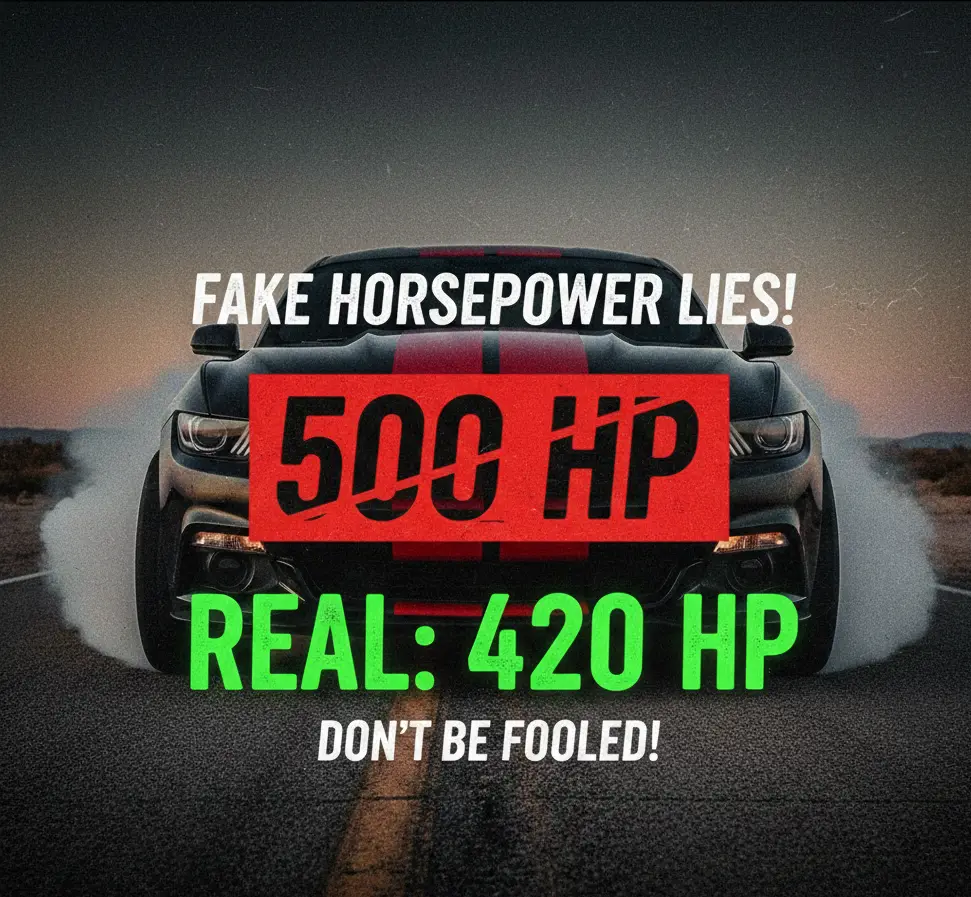
At low speeds, traction is the dominant factor in acceleration. Power only becomes relevant once grip limitations are removed. This is why high-horsepower cars often fail to feel fast in everyday driving, while lower-powered cars with good traction feel explosive.
If you want faster real-world acceleration, focus on:
tires
drivetrain
weight distribution
traction management
Not just horsepower numbers.
Scientific & Physics-Focused External Sources (Without Using That Term)
1. Physics StackExchange — Acceleration Limited by Tire–Road Interaction
A physics-based discussion showing that a car’s maximum acceleration is constrained by the interaction between tires and the road surface, not engine output alone. Includes equations and force limits.
https://physics.stackexchange.com/questions/743529/car-acceleration-limit-friction-vs-power
2. Vehicle Dynamics Textbook — Longitudinal Force Transfer
A university-level vehicle dynamics reference explaining how longitudinal forces at the wheels determine acceleration, regardless of engine power figures.
https://ftp.idu.ac.id/wp-content/uploads/ebook/tdg/TERRAMECHANICS%20AND%20MOBILITY/epdf.pub_vehicle-dynamics-theory-and-application.pdf
3. Applied Sciences (MDPI) — Tire–Road Friction & Vehicle Performance
A peer-reviewed scientific paper analyzing how tire-road friction directly limits vehicle performance, including acceleration behavior.
https://www.mdpi.com/2076-3417/14/5/1903
4. PhysicsForums — Force-Limited vs Power-Limited Acceleration
A physics explanation showing that at low speeds acceleration is limited by available tire force, while at higher speeds engine output becomes dominant.
https://www.physicsforums.com/insights/when-vehicle-power-dictates-acceleration/
6. HP Academy — Wheel Force vs Engine Output
A technical motorsport article explaining that acceleration depends on force delivered at the wheels, not peak horsepower numbers.
https://www.hpacademy.com/technical-articles/understanding-torque-and-horsepower-with-tractive-force/