Turbocharger vs Supercharger: Which One Truly Delivers More Power?
TurboCharger
Runs on exhaust gases. The hot air leaving the engine spins a turbine, which compresses air going into the engine.
so Turbo = free energy (from exhaust)
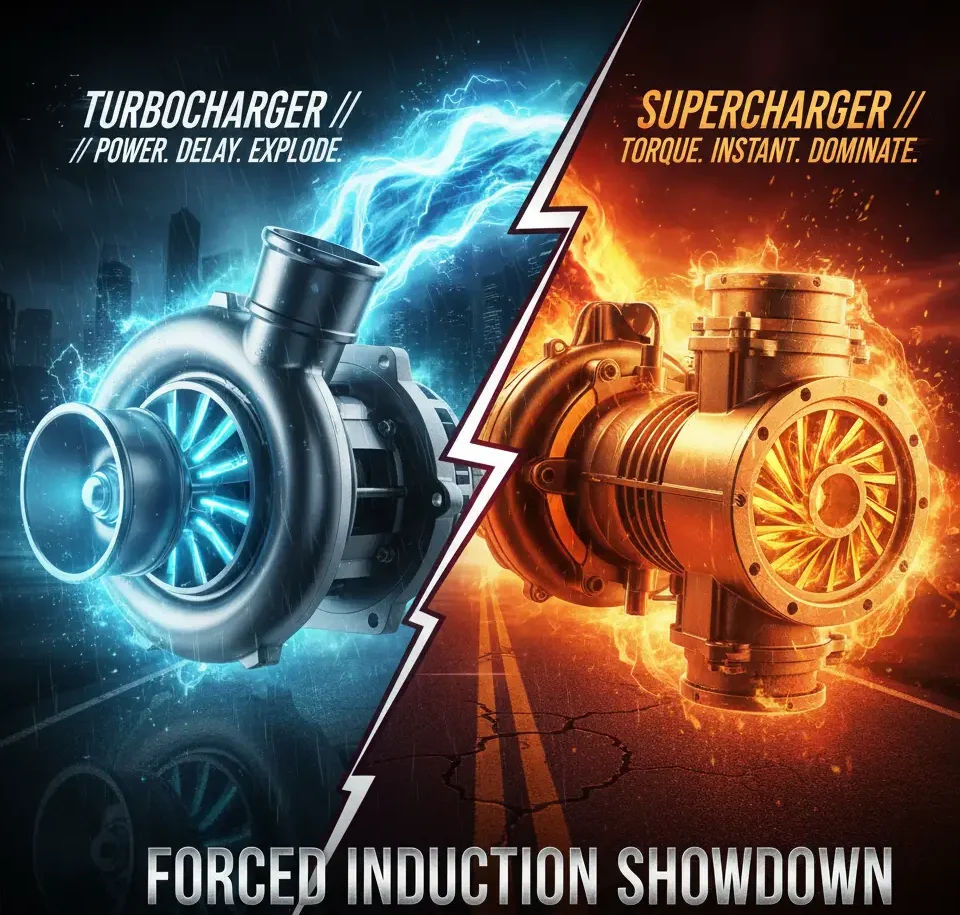
SuperCharger
Runs on the engine’s own power. It’s driven by a belt connected directly to the crankshaft, almost like an AC compressor.
so Supercharger = borrowed energy (from the engine)
Power Delivery: Quick Punch vs Delayed Boost
Supercharger: Instant Response
A supercharger gives power immediately. Press the throttle, and boom — boost is already there.
This is perfect for:
Drag racing
Muscle cars
Any driver who wants instant acceleration
Turbocharger: The Famous Turbo Lag
Turbolag happens because the turbo needs exhaust pressure to spin.
You press the gas… wait half a second… then the power kicks in HARD.
Modern turbos reduced the lag a lot, but superchargers are still king of instant response.
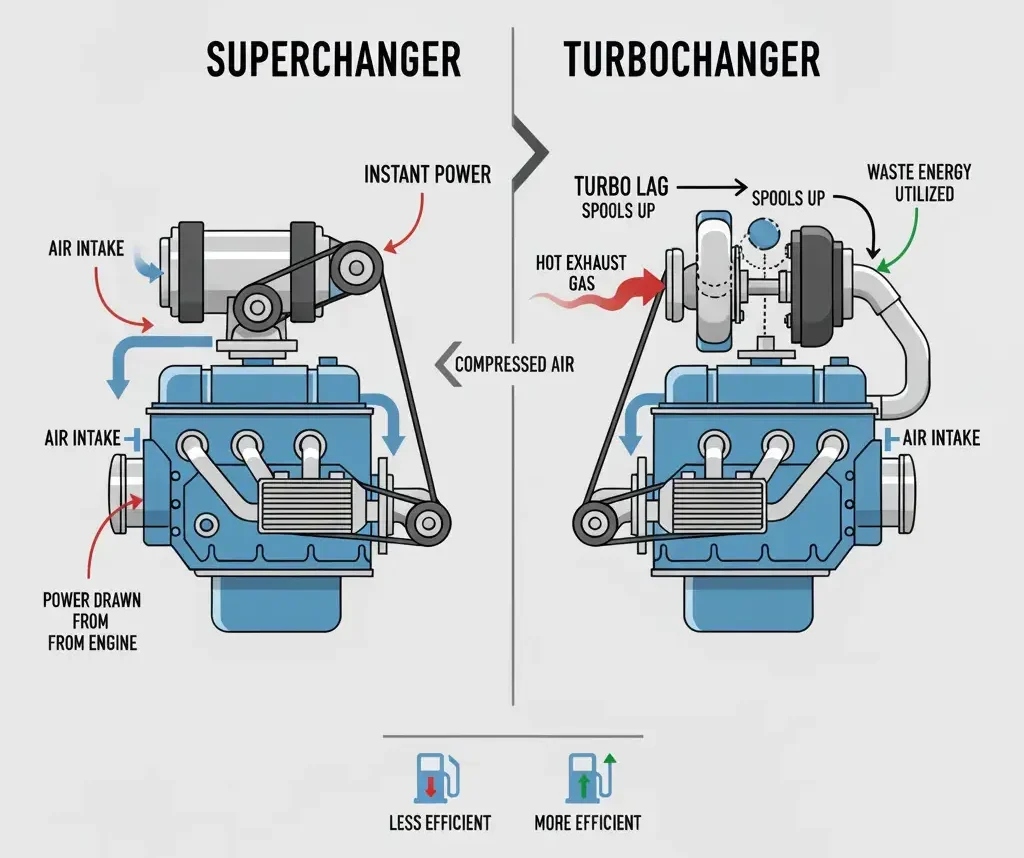
A turbocharger and a supercharger both have the same mission: force more air into the engine so it can burn more fuel and create more power. But the way each system works creates huge differences in power delivery, efficiency, reliability, and driving behavior. A turbocharger uses the engine’s exhaust gases to spin a turbine that compresses incoming air. This means a turbo recycles wasted energy and turns it into extra power. The advantage is obvious: more horsepower without stealing energy directly from the engine. However, because a turbo depends on exhaust flow, it usually takes a moment to spool up. This delay is known as turbo lag, and it affects low-rpm response. Modern engineering—variable geometry turbos, twin-scroll designs, and electric assist—has greatly reduced lag, but it still exists to some degree.
A supercharger behaves differently. It is mechanically connected to the engine through a belt running off the crankshaft. The moment the throttle opens, the supercharger spins instantly, delivering immediate boost with zero lag. This makes it extremely responsive and predictable, especially for drag racing, muscle cars, and performance builds that require instant torque. The downside is that the supercharger is “stealing” power from the engine in order to create power. This parasitic loss can range from mild to significant depending on the type: roots superchargers provide massive low-end torque but are less efficient, while centrifugal superchargers are more efficient but build boost gradually at higher rpm.
When comparing efficiency, turbos win almost every time. Because they rely on exhaust pressure, they deliver more power per unit of fuel. This is a key reason why modern manufacturers choose turbocharging to meet emissions standards while keeping engines powerful. Superchargers, on the other hand, increase fuel consumption noticeably because the engine must work harder to drive the compressor.
Heat is another important factor. Turbochargers run extremely hot due to their connection with the exhaust system, which increases intake air temperatures and requires intercoolers, heat shielding, and better oil cooling. Superchargers run cooler in general, but still generate heat under high boost. When it comes to reliability, both systems are strong when well-maintained, but turbos have more thermal stress while superchargers put extra strain on the crankshaft and belt system.
In real-world driving, the choice depends on what the driver wants. Turbochargers offer better efficiency, stronger top-end power, and superior fuel economy. Superchargers deliver instant throttle response, consistent boost, and a more aggressive driving feel. Both systems can make huge power—but they do it in very different ways.
Table of Contents