The SGP Sla 16 (Porsche Type 203): The Advanced Tank Engine That Never Made It to War
A New Engine for a Desperate Army
In the early 1940s, the German military needed a more reliable and powerful tank engine. Their main engine at the time, the Maybach HL230, was known for overheating and breaking down under the heavy weight of tanks like the Tiger II. To solve this, the German Weapons Agency asked Simmering-Graz-Pauker (SGP) in Vienna, along with Porsche, to design a brand-new powerplant. The requirements were strict: it had to be diesel, air-cooled, and compatible with existing tank designs.
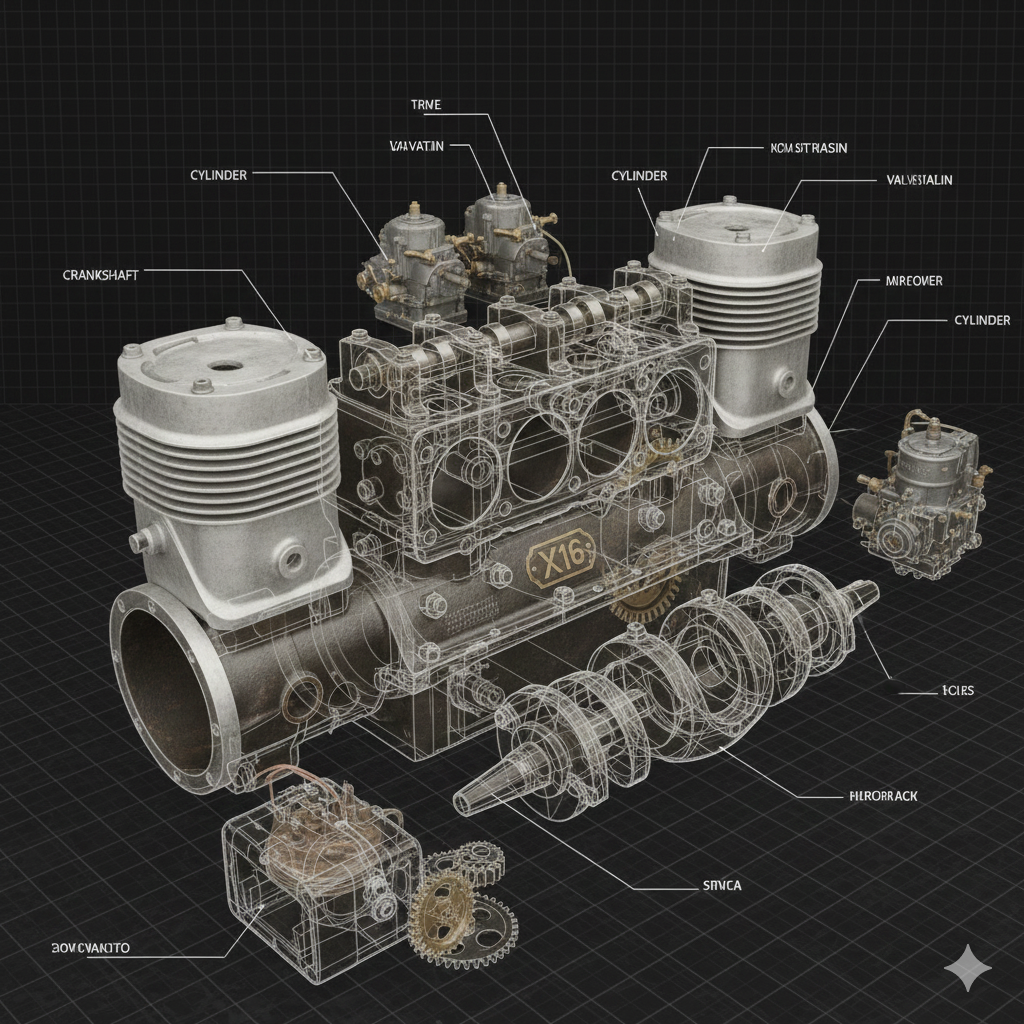
A Unique X-16 Cylinder Layout
The engine SGP proposed was unlike anything used in tanks before. It was an X-16 cylinder diesel engine, which means the cylinders were arranged in four banks forming the shape of an “X”. This design made the engine more compact while still allowing a huge amount of power output. On paper, it was cutting-edge engineering, far ahead of its time.
Why the SGP Sla 16 Never Reached Production
Even though the project had great potential, several major problems stopped it from ever reaching real tank service. The first issue was complexity. The X-engine layout required advanced manufacturing and precise materials that were difficult to produce during wartime. Germany’s industry was already under strain, and factories couldn’t keep up with such an intricate design.
Another challenge was time. By the time the SGP Sla 16 was being developed, the war had turned against Germany. Bombings, material shortages, and lack of manpower slowed all high-tech projects. The army shifted its focus toward simpler, faster solutions rather than experimental engines that needed months or years of testing.
Finally, logistics killed the project. An air-cooled diesel X-16 was extremely ambitious, and while it might have performed well if completed, the war simply didn’t leave enough room to finalize, test, and produce it.
A Promising Engine Lost to History
In the end, the SGP Sla 16 remained only a prototype phase concept. It never powered a tank, never entered mass production, and disappeared when the war ended. It stands today as an example of wartime engineering that was too advanced for the chaotic conditions in which it was created.
Even though it never turned a tank’s tracks, the SGP Sla 16 remains a fascinating piece of engineering history — a reminder of how innovation can be halted not by design, but by circumstances.